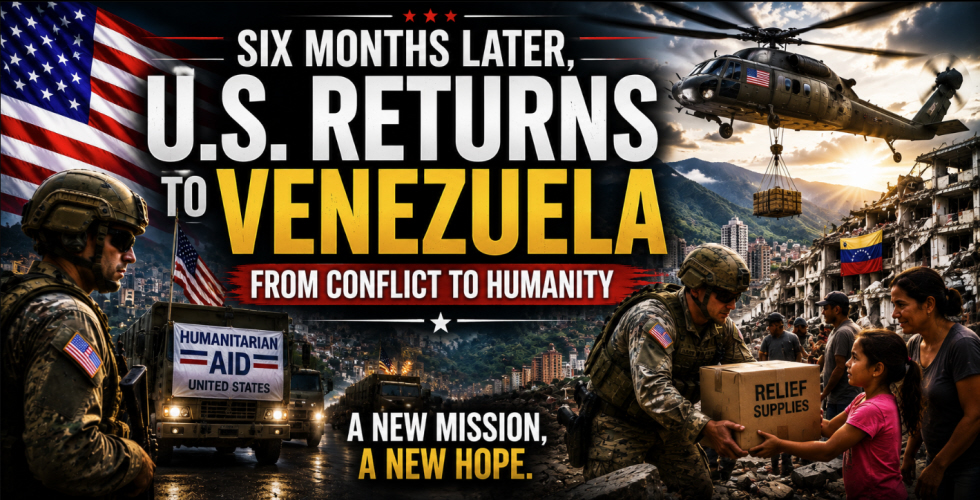
The United States is returning to Venezuela with a humanitarian mission after devastating earthquakes struck the country last week. American troops, rescue teams and emergency supplies are being deployed to support relief operations. The goal is to assist with search efforts, medical care and the first stages of recovery. The move marks a dramatic shift in a relationship recently defined by conflict. Just six months ago, U.S. military action in Venezuela reshaped the political landscape and deepened regional tensions. Now, Washington is presenting its presence as a life-saving operation rather than a military confrontation.
The contrast gives this mission major international significance. It shows how quickly geopolitics can change when disaster strikes. The earthquakes caused severe damage to homes, hospitals, roads and public infrastructure. Entire communities are now facing urgent shortages of food, water, shelter and medical assistance. Rescue crews continue searching through rubble in areas hardest hit by the disaster. For thousands of families, immediate help could make the difference between survival and tragedy. The U.S. contingent includes disaster-response specialists, engineers, medical teams and logistical support personnel.
Humanitarian supplies are also being sent to the affected regions. Washington says the operation is focused strictly on saving lives and helping stabilize emergency conditions. Officials describe the deployment as a response to human suffering, not politics. Still, the mission carries undeniable political weight. Any American military presence in Venezuela revives memories of recent intervention and raises questions across the region. Supporters argue that humanitarian need must come before political disputes. Critics warn that the operation could carry strategic implications beyond disaster relief.
Across Latin America, governments are watching the deployment with caution. Regional leaders want guarantees that the mission remains limited, transparent and coordinated with humanitarian agencies. International organizations have also called for relief efforts to stay focused on victims. The challenge is preventing a natural disaster from becoming another source of diplomatic tension. For Venezuelans, the priority is immediate survival. Many families have lost homes, relatives and access to basic services. Hospitals are overwhelmed, roads are damaged and communication remains difficult in several areas.
Under those conditions, outside assistance can become essential. The international response now includes humanitarian groups, neighboring countries and foreign governments. Medical supplies, tents, food, water-purification systems and rescue equipment are part of the emergency effort. The scale of the destruction means recovery will require more than a short-term operation. Rebuilding could take months or even years.
For the United States, this mission offers a chance to show a different face in Venezuela. After confrontation, the humanitarian response opens a limited space for cooperation. But the recent past continues to shape how every move is interpreted. Trust remains fragile, even during a disaster. In conclusion, the return of U.S. forces to Venezuela comes under extraordinary circumstances.
The earthquakes have temporarily changed the tone of a deeply complicated relationship. The immediate focus must remain on saving lives and helping affected communities. Even so, the political meaning of this mission will continue to draw close attention.