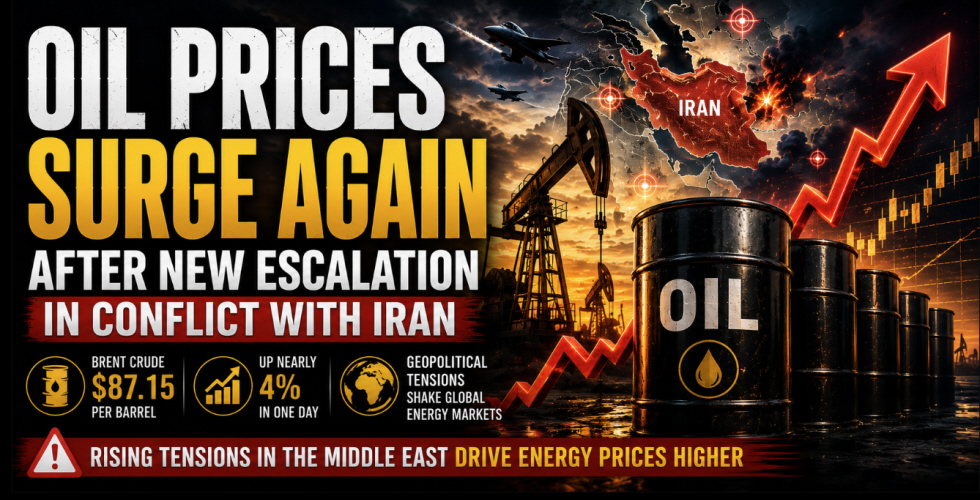
Global energy markets experienced another wave of volatility after a renewed escalation involving Iran increased concerns about the stability of worldwide oil supplies. Investors quickly responded to the heightened geopolitical tensions, sending crude prices sharply higher during Wednesday's trading session. Brent crude for September delivery climbed above 87 dollars per barrel, posting an increase of nearly four percent compared with the previous trading day. The rebound reversed the earlier decline in prices and highlighted the fragile balance that currently defines international energy markets.
Market analysts believe that every new military development or security threat in the region immediately reshapes investor expectations. Concerns about potential disruptions to global supply routes continue to influence trading decisions and increase price volatility. One of the primary concerns remains the security of oil exports passing through the Persian Gulf and other strategically important shipping corridors. Any disruption affecting these routes could have an immediate impact on crude availability and international energy prices.
Financial markets also reacted cautiously, recognizing that higher oil prices often translate into increased transportation, manufacturing, and production costs. If the upward trend continues, it could place additional inflationary pressure on economies around the world. Energy companies benefited from renewed investor interest as crude prices recovered, while industries heavily dependent on fuel began assessing the possible financial impact of sustained higher energy costs. Businesses are closely monitoring market conditions as geopolitical risks remain elevated.
Although the market had recently shown signs of stabilization following previous price declines, the latest escalation quickly changed investor sentiment once again. The rapid shift demonstrates how closely oil prices remain tied to geopolitical developments in the Middle East. Industry experts expect volatility to persist as long as uncertainty surrounds the military conflict and the international response. Every new development has the potential to trigger significant price swings, making energy markets especially sensitive to global political events.
For consumers and businesses alike, more expensive oil could eventually result in higher fuel prices, increased transportation expenses, and rising production costs across multiple industries. Governments and central banks continue to monitor energy markets because of their direct influence on inflation and economic growth.
The latest rebound in oil prices confirms that global energy markets remain highly vulnerable to geopolitical uncertainty. Until regional tensions ease and supply risks diminish, crude prices are expected to continue reacting rapidly to every major development, reinforcing an environment of ongoing market uncertainty.