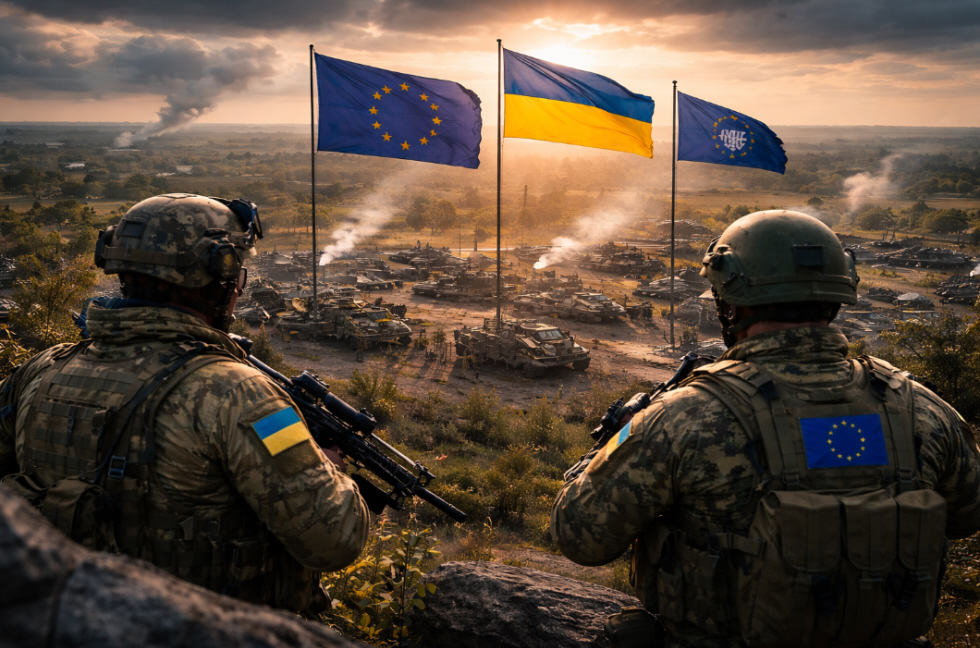
Ukraine has once again put forward one of its most ambitious proposals since the start of the war: the creation of a joint military force between Ukraine and Europe capable of sustaining continental security in the face of what Kyiv sees as a long-term and structural Russian threat. The initiative is intended to spark a broader strategic debate about the future of European defense. President Volodymyr Zelensky argues that the current security architecture is no longer sufficient for the scale of the challenge.
From his perspective, Europe must move toward a stronger and more coordinated defense model, one capable of responding effectively to a prolonged confrontation with Moscow. The proposal comes at a time when Russia is projecting a significant expansion of its armed forces in the coming years. Ukrainian officials interpret these plans as evidence that the conflict is unlikely to be resolved in the short term, forcing Europe to rethink its deterrence and defense mechanisms.
At the same time, Ukraine continues close consultations with its key Western partners. Germany, France, and the United Kingdom remain central to discussions on security guarantees, while broader talks explore how to sustain political, military, and economic support over the long run. One of the core issues in this debate is the financial burden of a prolonged war. Ukrainian authorities acknowledge that maintaining defensive capabilities over the next decade will require extraordinary resources, far beyond what the national budget alone can sustain.
This financial reality has fueled growing debate in Europe and the United States, where questions are increasingly being raised about the sustainability of long-term support for Ukraine. While Western assistance has been critical in slowing Russian advances, negotiations over future commitments have become more cautious and complex. Kyiv insists that defense spending should not be viewed solely as aid to Ukraine, but as a direct investment in European security. In this context, the idea of a joint force is presented as a shift from short-term assistance toward shared responsibility. Meanwhile, diplomatic contacts continue on multiple fronts.
Both Ukraine and Russia are exploring indirect channels with international actors, though no concrete breakthroughs have yet emerged to suggest an imminent resolution to the conflict. Nearly four years after the Russian invasion began, the war has entered a phase defined by endurance, long-term planning, and the reconfiguration of alliances. The proposal for a joint European military force reflects this new stage—less focused on immediate urgency and more on adapting to a prolonged period of tension.