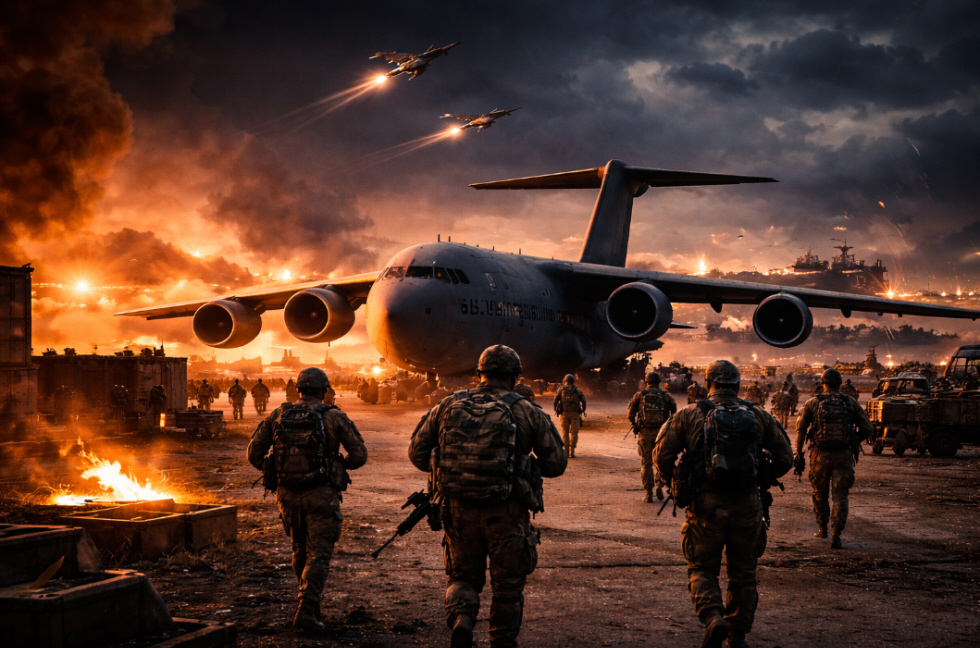
The United States has placed its military forces in the Middle East on heightened alert as speculation grows over a possible strike against Iran in the coming days. While significant operational assets are now positioned in the region, there has been no official confirmation that a final attack order has been issued. In recent hours, some analysts have floated the hypothesis that a military operation could begin as early as Saturday.
However, sources familiar with the decision-making process indicate that President Donald Trump is still weighing both military and diplomatic options before authorizing direct action. The deployment reportedly includes aircraft carriers, guided-missile destroyers, fighter jets, refueling aircraft, and forward-positioned airborne command centers. This level of preparation suggests that Washington intends to maintain full operational readiness should tensions escalate rapidly.
The buildup comes amid mounting concerns related to Iran’s nuclear program and recent regional developments that have intensified strategic pressure. U.S. officials have reiterated that the use of force remains on the table if national security interests are deemed to be at risk. Despite the extensive military positioning, the White House has not publicly announced a specific timeline for potential action. The president has indicated that a decision could be made within days, leaving room for last-minute diplomatic maneuvering or strategic recalibration. International actors are closely monitoring the situation.
European governments and regional powers have called for restraint, aware that any direct strike could trigger retaliatory measures and destabilize an already volatile region. Iran, for its part, has reportedly reinforced key strategic installations and warned that it would respond to any military aggression. Security analysts caution that a strike could spark a prolonged cycle of retaliation, potentially affecting energy routes and allied nations.
Broader geopolitical considerations are also influencing the strategic calculus. Diplomatic commitments, domestic political factors, and international events all form part of the equation surrounding a potential decision. Experts emphasize that military readiness does not necessarily equate to imminent action. In high-tension scenarios, force deployment can also serve as leverage in negotiations, signaling resolve without immediately crossing the threshold into open conflict.
For now, the situation remains critical but uncertain. The United States appears fully prepared to act if an order is given, yet no official confirmation of an imminent strike has been issued. The coming hours and days will likely determine whether tensions escalate into military engagement or shift toward renewed diplomatic efforts.