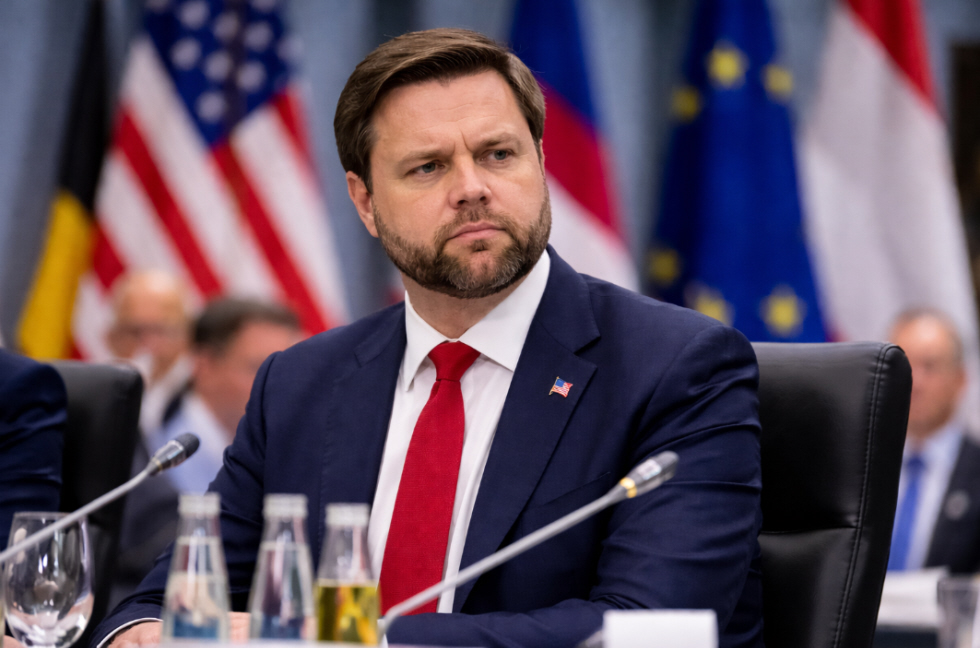
The Vice President of the United States, JD Vance, will ultimately not attend the Munich Security Conference, scheduled for February, despite reports in recent days that had confirmed his participation. The cancellation came as a surprise to organizers and diplomatic circles, as no official reason has been provided for his absence from one of the world’s most influential forums on security policy. The Munich Security Conference, initially set for February 13–15, 2026, brings together senior military officials, heads of state and government, diplomats, and defense experts each year to discuss major global security challenges and promote diplomatic initiatives.
For the United States, the conference has long been a key platform, even in years when the president does not attend and representation is delegated to the vice president. In that context, Vance’s presence had been widely expected, particularly given his growing influence within U.S. foreign policy circles. His absence leaves a symbolic gap at a time when transatlantic relations are facing visible strains, shaped by differences over the war in Ukraine, European security, and the regulation of digital platforms. JD Vance remains a particularly sensitive figure in Munich.
A year ago, the vice president sparked controversy by accusing European governments of censoring content on social media and silencing dissenting voices. According to Vance, such practices undermine democratic legitimacy and threaten the strength of the relationship between Europe and the United States. During his speech at the 2025 Munich Security Conference, Vance was blunt, stating that “if a government is afraid of its own voters, there is nothing the United States can do for it.” His remarks triggered strong reactions and marked one of the most tense moments of the conference, leaving a lasting impression on the event.
Another point of contention was his criticism of the exclusion of Alternative for Germany (AfD) and the Sahra Wagenknecht Alliance (BSW) from the conference. Organizers defended the decision at the time by arguing that those parties did not adhere to the principle of “peace through dialogue,” citing incidents such as lawmakers leaving the Bundestag during a speech by Ukrainian President Volodymyr Zelensky. This year, the participation of the AfD once again became a subject of debate. Political figures, including members of the CSU, called for its exclusion, citing alleged ties to Russia and China as well as potential security risks.
However, the new president of the Munich Security Conference, Wolfgang Ischinger, ultimately allowed the party to attend to prevent it from claiming political discrimination or exclusion from Germany’s public life. The AfD has already confirmed its intention to travel to Munich, setting the stage for an intense and potentially divisive debate. In this environment, JD Vance’s absence not only avoids the risk of another verbal confrontation but also leaves open the question of how the United States will position itself at a key forum shaping the future of international security.