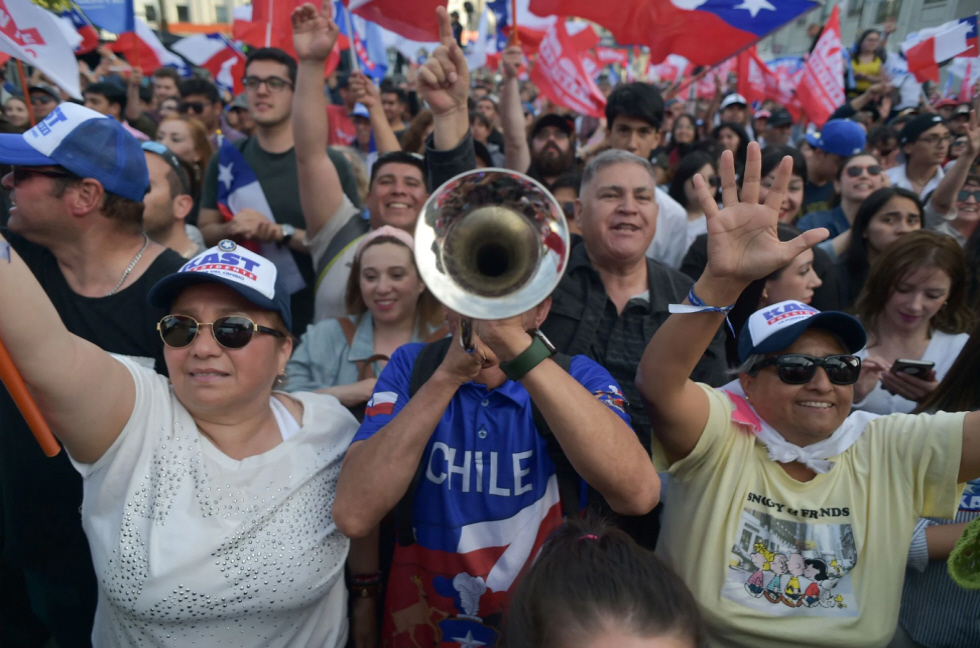
Chile has taken a clear political turn after conservative candidate José Antonio Kast won the second round of the presidential election by a wide margin, defeating communist candidate Jeannette Jara. The campaign was dominated by concerns over security and migration, two issues that have grown in importance among voters despite Chile remaining one of the safest countries in Latin America.
Rising crime in certain areas and the rapid increase in the migrant population, now estimated at around ten percent and largely from crisis-stricken Venezuela, have fueled public anxiety, with surveys showing security concerns higher than in countries such as Mexico and Colombia. Kast, 59, secured about 58 percent of the vote compared with Jara’s 42 percent, a result she acknowledged by conceding defeat and congratulating him. Speaking to supporters in Santiago, the president-elect said that “Chile wants change” and promised to restore respect for law and order.
The outcome was welcomed by several international leaders, including U.S. Secretary of State Marco Rubio, who expressed interest in strengthening cooperation on regional security and trade, and Argentine President Javier Milei, who praised the result as a step forward for economic freedom in Latin America. Kast has outlined a hard-line agenda on crime and irregular migration, including stricter border controls, deportations and the construction of new prisons, alongside economic measures aimed at cutting corporate taxes and public spending.
A socially conservative figure, he has previously drawn criticism for downplaying crimes committed during Chile’s military dictatorship and for opposing same-sex marriage and expanded Indigenous rights, although he softened his rhetoric during the campaign. His victory follows a left-wing government that achieved progress on pension reform and reducing the workweek to 40 hours, but struggled to deliver results on fiscal reform and public security, issues that will now define the start of Chile’s new political chapter.