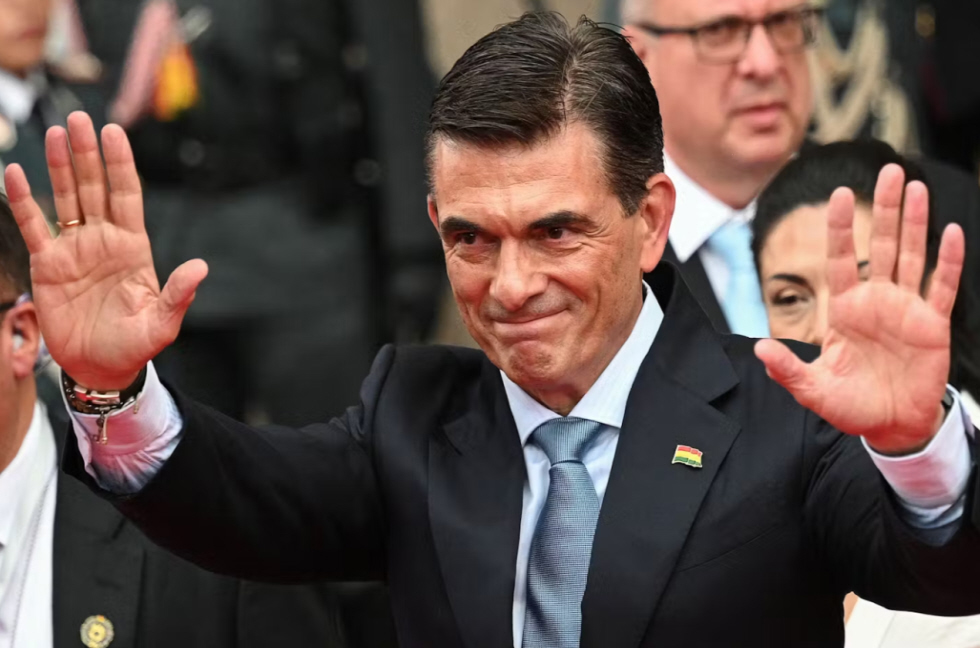
Bolivia has undergone a historic political shift: Christian Democrat Rodrigo Paz has been sworn in as the new president of the South American nation. In a solemn ceremony at the parliament building in La Paz on Saturday, the 58-year-old took the oath of office with the words, “God, family, and homeland: Yes, I swear.” His inauguration marks the end of a 20-year era of left-wing governments that had shaped the country politically and economically. Immediately after being sworn in, the new head of state announced a significant change in political direction:
Paz aims to stabilize Bolivia’s economy, resume dialogue with Western nations, and realign the country’s international relations. In particular, he emphasized the need to restore diplomatic ties with the United States, which have been frozen for years—a step deliberately avoided by his predecessors Luis Arce and Evo Morales. Both had instead relied on close partnerships with countries such as Venezuela, China, Russia, and Iran. Economy in crisis – Paz plans tax reform
The new government faces enormous economic challenges. The outgoing administration of Luis Arce leaves behind a nation in financial distress: foreign currency reserves are nearly depleted after the state financed large gasoline and diesel subsidies. Inflation peaked at 25 percent during the summer and still stood at 19 percent in October. Paz has announced plans to strengthen domestic industry and boost new investment through a comprehensive tax reform. Rodrigo Paz won the October runoff election with just under 55 percent of the vote, according to official results. His conservative rival Jorge “Tuto” Quiroga received around 45 percent. After the results were announced.
Quiroga’s supporters protested, accusing the electoral commission of irregularities and manipulation. However, international election observers have so far found no evidence of systematic violations. New president, old expectations Paz presents himself as a bridge-builder between political factions—a claim that will likely be tested amid Bolivia’s deep social divisions. Above all, citizens expect from him economic stability, job creation, and a reliable international course. Whether he can succeed in balancing conservative values with pragmatic economic policy will become clear in the coming months.