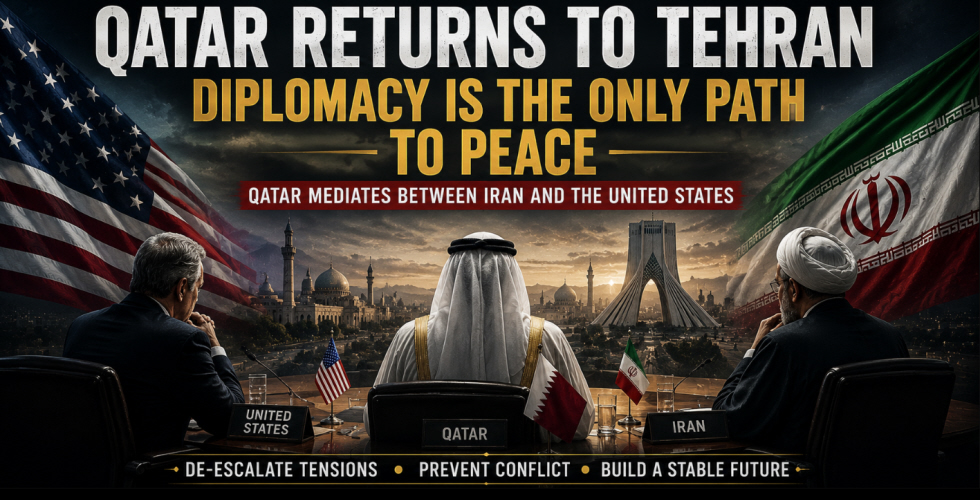
Qatar has renewed its diplomatic efforts in the Middle East through a new round of discussions in Iran aimed at easing tensions between Tehran and Washington. The initiative seeks to keep communication channels open at a particularly sensitive moment for regional stability. The development has attracted attention from governments and international observers alike. According to reports, Qatari representatives have returned to Iran to facilitate talks focused on the events that recently increased tensions between the two countries.
The primary objective is to identify ways to prevent further incidents and encourage a more constructive environment for dialogue. Mediation continues to be viewed as a vital diplomatic tool. Qatar's involvement comes as no surprise given the country's experience in handling complex diplomatic negotiations. Over the years, Doha has played a significant role in various international mediation efforts, often serving as a bridge between governments with deep political differences. This ability has strengthened its standing in the region.
One of the central topics under discussion is believed to be the recent escalation that strained relations between Iran and the United States. Participants are expected to examine the factors that contributed to the deterioration of diplomatic relations and explore measures that could reduce the risk of future confrontations. Understanding these developments remains a priority. The meetings may also address elements connected to previous understandings and diplomatic frameworks that remain in place. Although major differences continue to separate Washington and Tehran, many observers believe opportunities for negotiation still exist.
Preserving those opportunities is considered one of the main goals of the mediation effort. The international community is closely monitoring these diplomatic movements because of their potential impact on regional security. The Middle East remains one of the most strategically important and sensitive regions in the world. Any progress or setback in negotiations can influence developments far beyond the countries directly involved. Another important factor is the economic impact that could result from reduced tensions.
Global energy markets often react quickly to signs of instability in the Gulf region. A more positive diplomatic climate could help strengthen confidence among investors and contribute to greater market stability. Experts agree that successful mediation requires time, patience, and political commitment from all parties involved. Long-standing disagreements cannot be resolved overnight, especially when years of mistrust have accumulated.
Nevertheless, maintaining open dialogue is widely regarded as a meaningful step forward. For Qatar, a successful outcome would further reinforce its reputation as an influential diplomatic actor on the global stage. The country has invested considerable effort in promoting negotiation and dialogue as key elements of its foreign policy. This latest mission reflects that broader strategy.
While no immediate breakthrough is expected, the continuation of talks demonstrates that there is still interest in avoiding a larger confrontation and pursuing diplomatic solutions. The outcome of these discussions could play an important role in shaping future relations between Iran and the United States and in maintaining stability across the region.