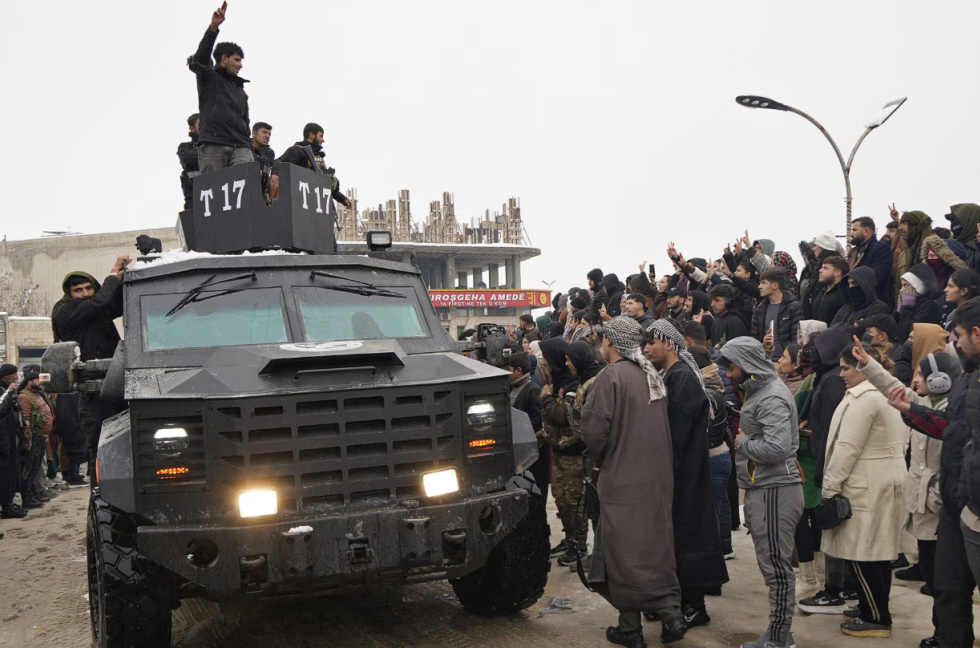
The Syrian city of Kobane is facing an increasingly severe humanitarian situation after more than a week under siege by forces allied with the government in Damascus, according to Kurdish activists and the Syrian Observatory for Human Rights, based in London. Reports indicate that access to food and essential supplies has been sharply reduced, leaving civilians in rapidly deteriorating conditions.
Kobane has become a refuge for many families displaced by fighting across northeastern Syria. In recent weeks, government forces have advanced into areas previously controlled by the Syrian Democratic Forces (SDF), the Kurdish-led alliance that for years governed large parts of the region known as Rojava. Local activists warn that the blockade has pushed thousands of residents into what they describe as “catastrophic” humanitarian conditions.
Supply routes have been largely cut off, limiting access to food, medicine, and basic necessities, while concerns grow for children, the elderly, and those with chronic illnesses. Syria’s transitional authorities have not publicly addressed the accusations regarding the worsening humanitarian situation in Kobane. However, state media reported that a humanitarian convoy carrying food and medical supplies departed from Aleppo on Saturday bound for the city.
According to official sources, the convoy of 24 trucks was organized by Aleppo’s local authorities in coordination with United Nations humanitarian agencies, aiming to ease the suffering of civilians trapped in the area. Despite these assurances, Kurdish organizations and independent observers argue that the aid delivered so far remains insufficient given the scale of the crisis.
They continue to call for sustained, unrestricted humanitarian access to the city. Kobane, once a symbol of Kurdish resistance during the battle against the Islamic State, has once again become a focal point of Syria’s conflict—this time amid a struggle for territorial control and its direct impact on civilian populations.
As military movements and political negotiations continue in the background, the situation in Kobane remains a source of growing concern for humanitarian organizations and the international community, raising fears of another deepening humanitarian emergency in a region already scarred by years of war.