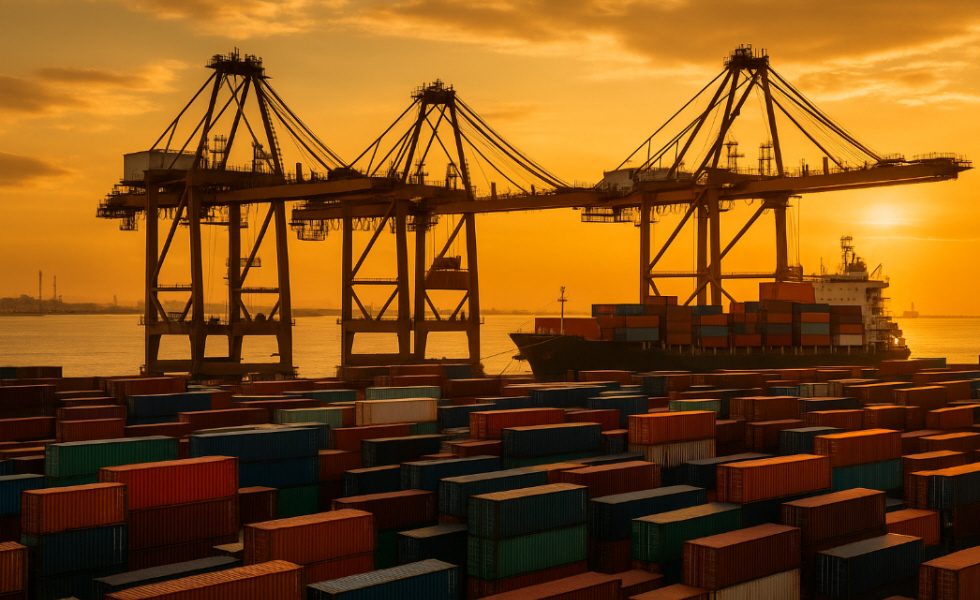
WTO Director-General Ngozi Okonjo-Iweala delivered a stark warning on Tuesday, declaring that the rapid rise in import tariffs around the world is triggering the most serious disruption to global trade norms seen since the aftermath of World War II.
According to the WTO’s latest report, the share of world trade conducted under its Most Favored Nation (MFN) framework—a system designed to ensure equal treatment and predictability for all members—has dropped from nearly 80% in recent years to just 72% today. This sharp decline illustrates a weakening commitment to multilateral rules and a turn toward protectionist policies that threaten to undermine the stability of global supply chains.
While the WTO modestly raised its projection for trade growth in 2025 from 0.2% to 0.9%, Okonjo-Iweala cautioned that these figures should not be interpreted as a sign of recovery. She emphasized that the real economic pain of tariffs often appears with a delay, as companies first rely on existing inventories before facing higher input costs, disrupted sourcing, and retaliatory measures.
“We are facing an unprecedented fragmentation of the rules-based trading system,” she said, adding that if current trends continue, the world could enter 2026 with a global economy more fractured and volatile than at any point in modern history. The ripple effects of tariffs are already being felt in specific sectors. India recently lodged a formal complaint against the United States over a 50% tariff on copper imports, arguing that the measure violates WTO obligations and unfairly penalizes its exporters.
Other countries, including members of the European Union and Latin America, are also reviewing potential legal action or considering retaliatory tariffs of their own. Analysts warn that the spread of unilateral trade measures risks sparking a chain reaction, with each country attempting to shield its industries at the expense of the broader system. Beyond the immediate trade disputes, economists point to a deeper concern: the erosion of trust in the WTO’s ability to enforce its rules.
With geopolitical rivalries intensifying, some governments view tariffs not only as economic tools but as instruments of strategic leverage. This shift has led to a perception that the global trading system is no longer neutral but increasingly politicized. If left unchecked, Okonjo-Iweala warned, the combination of economic nationalism and escalating trade tensions could permanently reshape the structure of global commerce.
For businesses, the uncertainty is palpable. Multinational corporations are reconsidering long-established supply chains, diversifying away from traditional partners, and in some cases bringing production closer to home to mitigate risks. Such moves may protect individual firms but collectively contribute to inefficiency, higher consumer prices, and reduced global growth.
As the debate over tariffs intensifies, the future of the global economy appears more uncertain, with the WTO struggling to preserve its central role in an increasingly fragmented landscape.