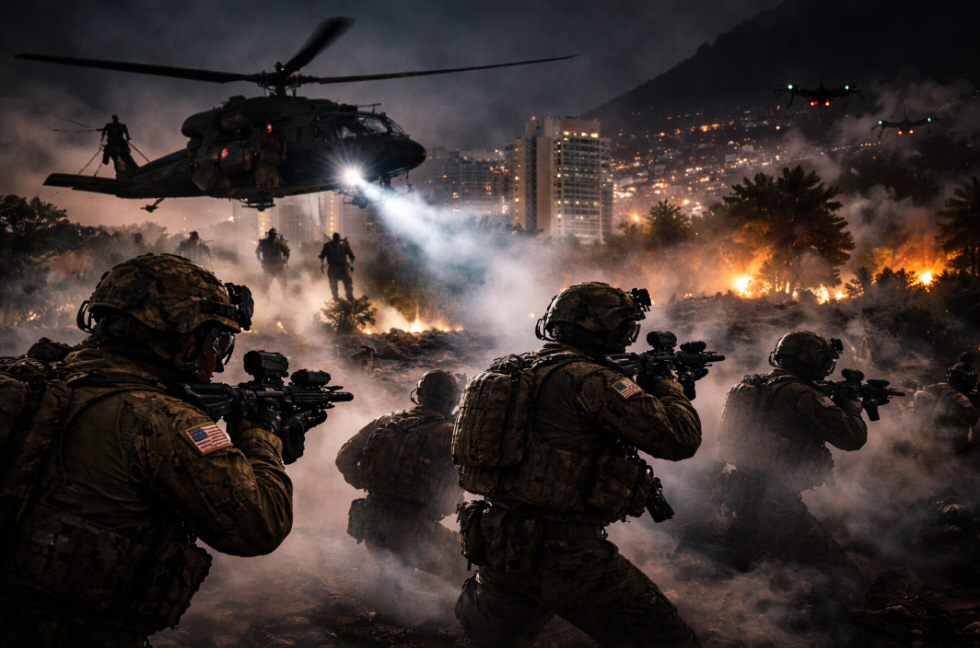
In early January 2026, reports emerged that U.S. military forces carried out a surprise operation in Caracas, Venezuela, resulting in the arrest of President Nicolás Maduro. The development marked an extraordinary moment in U.S.–Venezuela relations and immediately drew global attention due to its political and strategic implications. Alongside official statements, a series of unverified accounts began circulating on social media and alternative media platforms, describing unusual effects experienced by Venezuelan security forces during the operation.
These narratives quickly fueled speculation about the possible use of advanced or unconventional technology on the ground. One of the most widely shared testimonies came from an alleged eyewitness who claimed that a powerful, unfamiliar force struck defending troops without warning. The individual described intense physical distress, disorientation, and symptoms such as nosebleeds, leading to speculation about a so-called “sonic” or non-lethal incapacitating weapon.
According to these accounts, electronic systems allegedly failed moments before the appearance of multiple drones over military positions. The sudden loss of radar capability and the rapid progression of events contributed to confusion among Venezuelan forces, who reportedly struggled to respond effectively. Some versions of the story further claim that a relatively small number of U.S. soldiers were able to overpower a much larger group of defenders in a short period of time.
Descriptions of extreme precision and speed in the engagement have been used to reinforce the perception of overwhelming technological superiority. It is important to note, however, that there has been no official confirmation from U.S. authorities or independent observers regarding the use of sonic weapons or experimental military technology during the operation. Claims about such devices remain unverified and should be treated with caution. The U.S. administration has framed the operation as part of a broader effort to address long-standing security concerns, including allegations related to organized crime and narcotics trafficking.
Following his arrest, Maduro was transferred to the United States, where he is expected to face judicial proceedings. International reactions have been mixed. Some governments and analysts have questioned the legality of a unilateral military action, while others argue that the situation reflects deeper regional instability and unresolved political tensions that have built up over many years. Inside Venezuela, the aftermath of the operation has led to heightened uncertainty.
Reports of increased security measures, restricted movement, and political realignments have added to public anxiety, as citizens attempt to assess what the sudden change means for the country’s immediate future. As discussions continue in diplomatic and policy circles, the episode highlights the challenge of separating confirmed facts from rapidly spreading narratives in times of crisis. Until clearer evidence emerges, claims involving extraordinary weapons remain part of an unresolved and closely watched debate.