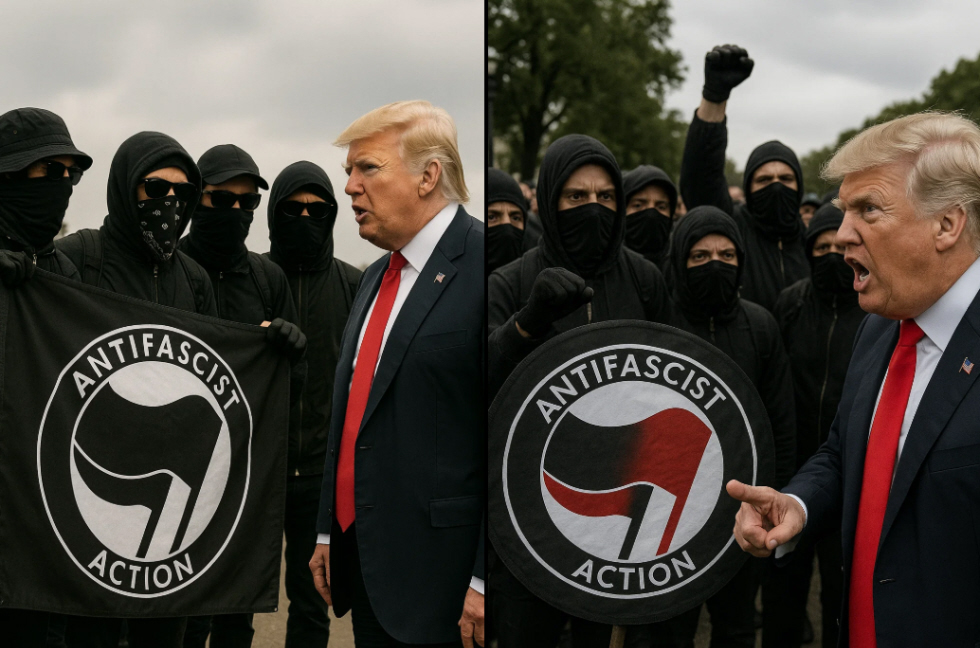
U.S. President Donald Trump has taken a controversial step by signing a decree that officially classifies the left-wing Antifa movement as a “domestic terrorist organization.” According to the president, the group maintains a “pattern of political violence” aimed at “suppressing legitimate political activities and obstructing the rule of law.” The decision signals a hardening of the government’s stance toward a movement which, according to U.S. Congressional research, lacks centralized leadership or a national organizational structure.
The term Antifa stands for antifascist and encompasses independent, radical, and like-minded groups and individuals. Trump has repeatedly blamed Antifa for violent incidents in recent years. Among them, he alleged its involvement in the January 6, 2021, Capitol attack, despite investigations confirming that it was his own supporters who stormed the building, leaving around 140 security officers injured and several offices vandalized.
The movement, however, did play a role in violent protests during Trump’s first inauguration in January 2017, when masked demonstrators dressed in black smashed windows and set a car on fire in Washington D.C. Additionally, Antifa has been visibly active in counter-protests against far-right extremist groups, which has contributed to its reputation as a disruptive actor in the American political scene.
The debate over the nature of Antifa is not new. Christopher Wray, director of the FBI during Trump’s first term, described it as “a movement or an ideology” rather than a structured organization with centralized command. Despite this, the White House maintains that Antifa’s actions represent a direct threat to public order. Trump’s decision also comes amid rising political violence: the September 10 shooting death of 31-year-old far-right activist Kirk was linked by the president to alleged Antifa ties, though no official evidence has confirmed such a connection.
Antifa’s influence is not limited to the United States. The movement is also active in parts of Europe, such as Austria, where its supporters regularly join demonstrations against identitarian and far-right groups. Washington’s move to designate Antifa as “terrorist” raises legal and political questions, as it could pave the way for more restrictive measures against its supporters while intensifying the debate over the limits of protest and dissent in a democracy.