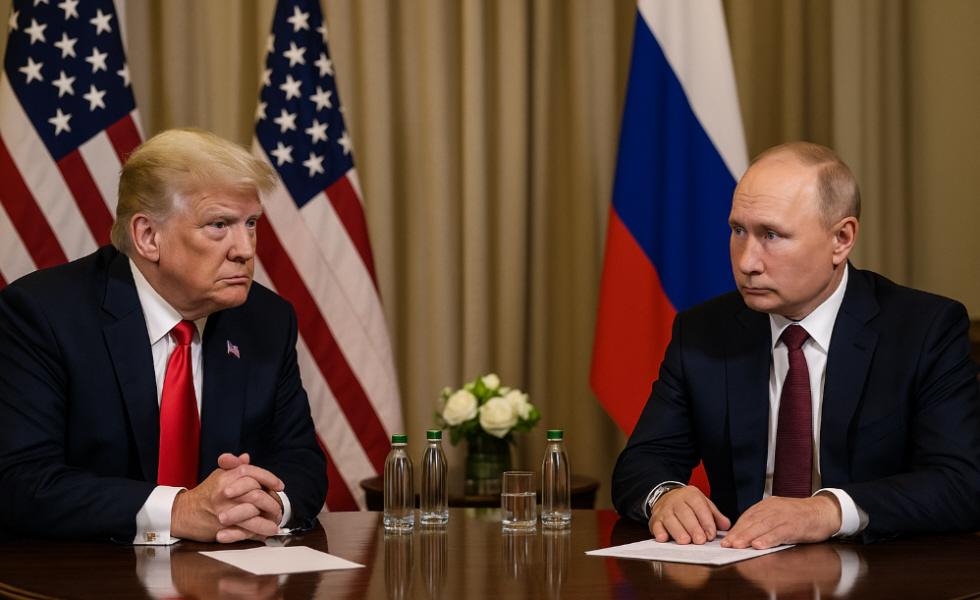
U.S. President Donald Trump and Russian President Vladimir Putin convened today at 11:00 a.m. local time at Joint Base Elmendorf–Richardson in Anchorage, Alaska, marking their first face-to-face summit since Trump’s return to the presidency. Trump urged an immediate ceasefire in Ukraine, stating, “I want the killing to stop today,” though he clarified he would not negotiate territorial terms on Ukraine’s behalf—he wants Ukraine at the table to decide its fate.
Accompanying Trump were Secretary of State Marco Rubio and Special Envoy Steve Witkoff, joined later by Treasury Secretary Scott Bessent, Commerce Secretary Howard Lutnick, Defense Secretary Pete Hegseth, and Chief of Staff Susie Wiles. On the Russian side, key aides including Foreign Minister Sergey Lavrov participated. The choice of Alaska—a former Russian territory that became U.S. soil in 1867—serves both symbolic and strategic purposes, underscoring historical links and logistical proximity for a secure meeting site.
Analysts view the summit as a diplomatic win for Putin, who gains legitimacy by reentering high-level talks, while Trump aims to bolster his image as a global peacemaker and even suggested a potential nuclear arms control agreement might arise from the talks. However, Ukrainian President Volodymyr Zelenskiy—not invited—expressed concern that freezing the conflict without Kyiv’s involvement could effectively legitimize Russia’s territorial gains.
European leaders and Kyiv warned against any settlement that bypasses Ukrainian sovereignty. Despite these tensions, the meeting laid groundwork for broader diplomatic discussions, including a possible three-way summit later involving Zelenskiy, and served as a high-stakes test of Russia’s willingness to compromise amid mounting economic pressure and the promise of severe consequences if peace efforts fail.