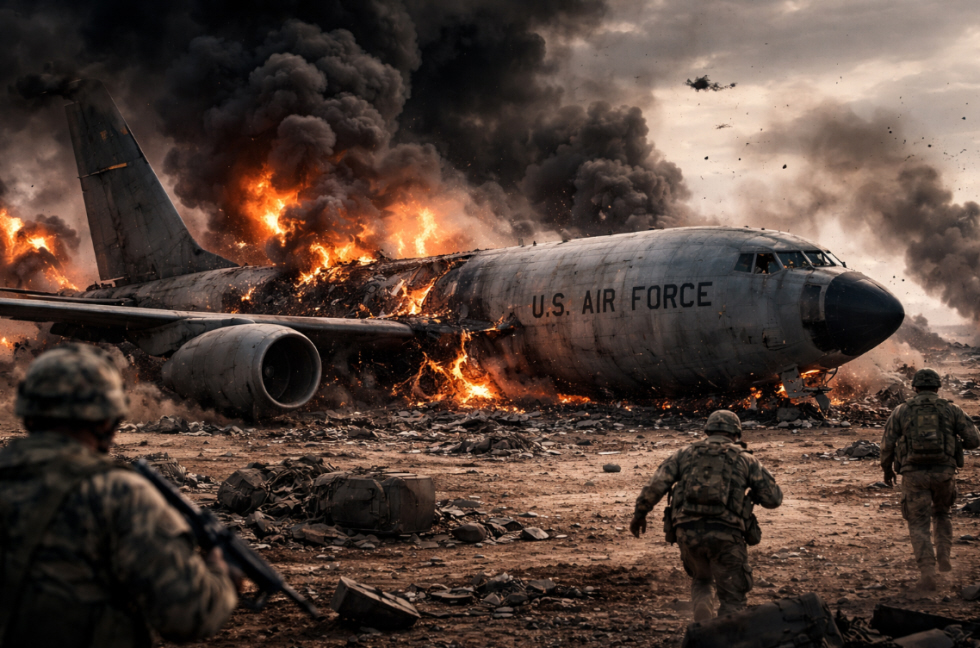
The war involving Iran, the United States and Israel has entered its fourteenth day with no clear signs of de-escalation. Military operations continue across several areas of the Middle East, and a new tragic development has now added to the growing list of casualties linked to the conflict. A United States Air Force aerial refueling aircraft crashed in western Iraq while conducting an operational mission connected to the ongoing military campaign.
The aircraft, identified as a KC-135 tanker, was supporting combat operations in the region when the incident occurred. Officials later confirmed that all six crew members aboard the aircraft were killed in the crash. The plane had been part of a strategic refueling operation designed to allow fighter jets and bombers to remain in the air for extended missions over the conflict zone.
The crash occurred during a period of intense aerial activity over the Middle East. Since the beginning of the war, thousands of military targets have reportedly been struck as part of a coordinated campaign involving both U.S. and Israeli forces. Early speculation suggested that the aircraft might have been hit during combat operations. However, American military officials indicated that the incident does not appear to have been caused by enemy fire or friendly fire.
Aerial refueling missions are considered among the most technically demanding operations in military aviation. These flights often take place at high altitude and require precise coordination between multiple aircraft operating in potentially dangerous environments. At the same time, new reports circulating within military circles suggest that Iran’s leadership may also have been directly affected by recent strikes.
According to U.S. officials, Iran’s newly installed supreme leader may have been wounded during the first wave of attacks. The same reports claim the leader could be seriously injured and possibly disfigured, which may explain his absence from public appearances since the start of the conflict. Iranian authorities have not released recent images or official statements confirming his condition.
The possibility that the country’s leadership has been physically affected by the conflict adds another layer of uncertainty to an already volatile situation. Regional observers warn that such developments could further complicate diplomatic efforts aimed at reducing tensions. As the war continues into its third week, international concern is rising. Governments and analysts around the world are closely monitoring the situation, fearing that the conflict could expand further and trigger wider geopolitical and economic consequences.