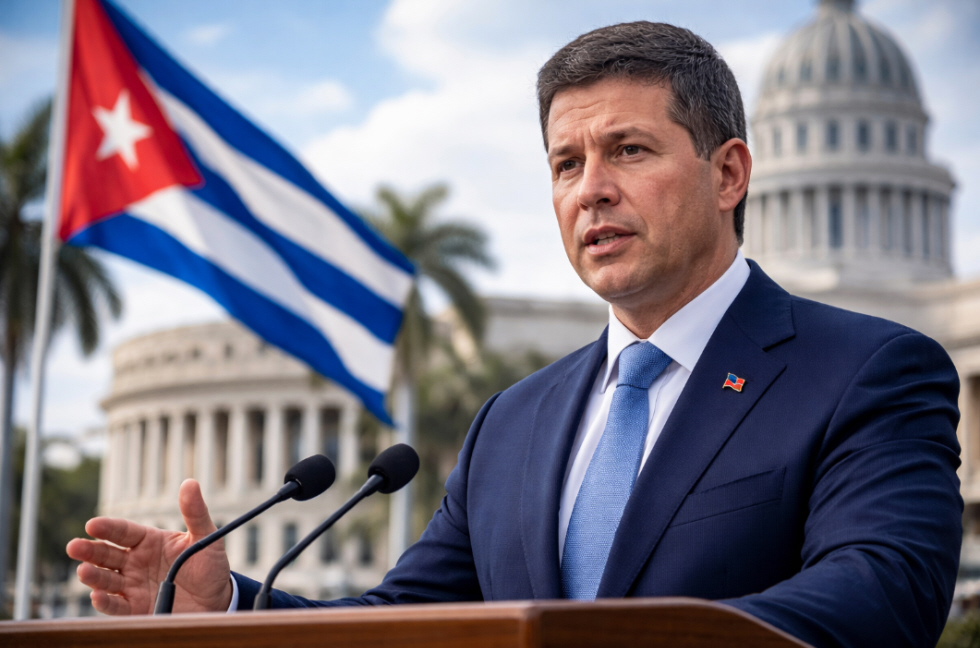
A close relative of Fidel and Raúl Castro has begun to gain visibility as a potential key figure in Cuba’s future political leadership, as the country approaches the end of President Miguel Díaz-Canel’s term in 2028. The development comes amid institutional adjustments and internal realignments within the Cuban power structure. Oscar Pérez-Oliva Fraga, currently a vice prime minister, was recently appointed as a deputy to the National Assembly of People’s Power, a formal step that makes him eligible for the presidency under Cuba’s political system, where the head of state is chosen by Parliament from among its members.
At 54 years old, Pérez-Oliva Fraga is a great-nephew of the Castro brothers and has experienced a notably rapid rise within the government. In less than two years, he moved from roles linked to foreign trade to becoming one of the youngest figures to reach the vice-prime-minister level. His career has been closely connected to strategic areas of the Cuban economy, particularly sectors involving foreign investment and state-run enterprise management.
This technocratic profile has helped him consolidate influence within key decision-making circles. A central element of his trajectory is his proximity to the military-managed business conglomerate that controls a significant share of the island’s economic activity. This network has historically played a decisive role in shaping Cuba’s economic and political direction. The current context is also shaped by a recent constitutional reform that removed the age limit for first-term presidential candidates.
The change has widened the field of potential successors and reshaped expectations around the country’s leadership transition. Alongside Pérez-Oliva Fraga, other senior figures continue to be mentioned within political circles, including high-ranking Communist Party officials and government leaders with military backgrounds, pointing to a controlled but complex internal succession process.
While no formal decisions have been announced, recent moves suggest that Cuba’s succession process has entered an early yet meaningful phase. Rather than signaling abrupt change, the developments indicate a carefully managed transition in which historical power structures and a new generation of leadership increasingly intersect.