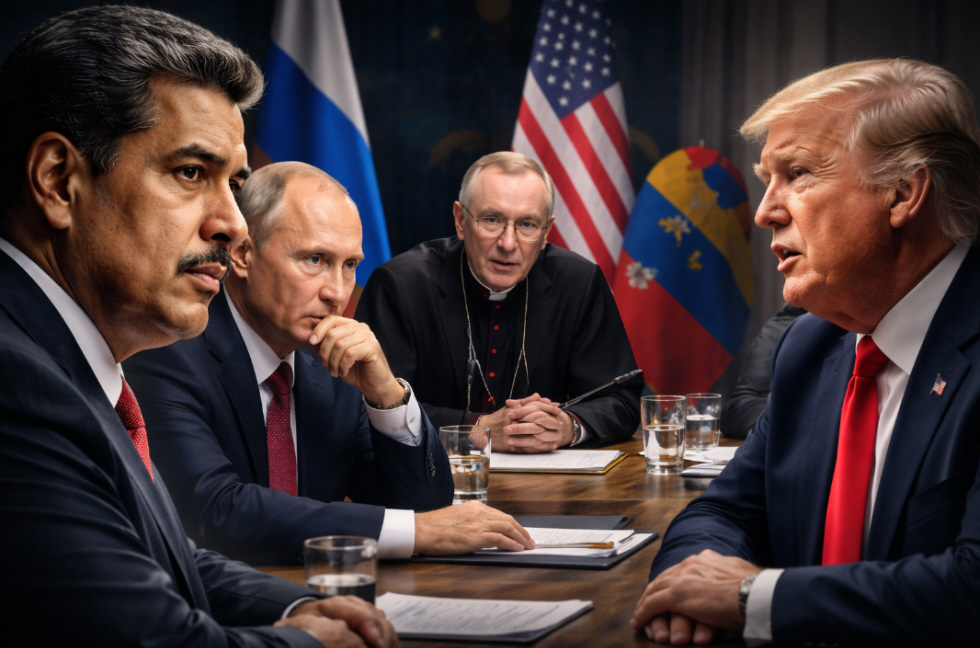
In the months leading up to the military operation that resulted in the capture of Nicolás Maduro, a high-level diplomatic effort was quietly underway to prevent a violent outcome in Venezuela. International intermediaries explored a negotiated exit for the former Venezuelan leader, aiming to remove him from power without triggering direct military confrontation.
The initiative involved discreet contacts between Washington and diplomatic actors linked to the Vatican, with the goal of facilitating Maduro’s departure under conditions that would guarantee his personal safety. As part of these discussions, Russia emerged as a potential destination willing to grant political asylum and security assurances. The proposal was designed to reduce regional instability and avoid an escalation that could have wider geopolitical consequences. By offering Maduro a safe exit, the plan sought to preserve dialogue channels between major powers at a time of heightened global tensions on multiple fronts.
According to diplomatic assessments, the offer included guarantees intended to reassure Maduro and members of his inner circle. However, the negotiations encountered serious obstacles related to the former leader’s personal demands and concerns about life in exile, including the loss of political influence and access to financial resources abroad. Those concerns ultimately led Maduro to reject the negotiated solution. The collapse of the diplomatic track narrowed the options available to Washington and its allies, paving the way for a military operation that fundamentally altered the course of Venezuela’s political crisis.
The failure of the mediation effort highlighted the limits of diplomacy when political survival and personal interests collide. Despite efforts to craft a compromise, the gap between what was offered and what was demanded proved insurmountable. Russia’s involvement in the discussions reflected its long-standing strategic ties with Venezuela, built over decades through energy cooperation, arms agreements, and political alignment.
A negotiated exit would have allowed Moscow to mitigate losses and avoid a scenario that exposed its regional vulnerabilities. With Maduro now removed from power and facing legal proceedings abroad, the episode stands as a revealing example of how close Venezuela came to a different outcome. It underscores how fragile diplomatic solutions can be when global strategy, regional stability, and individual calculations intersect.