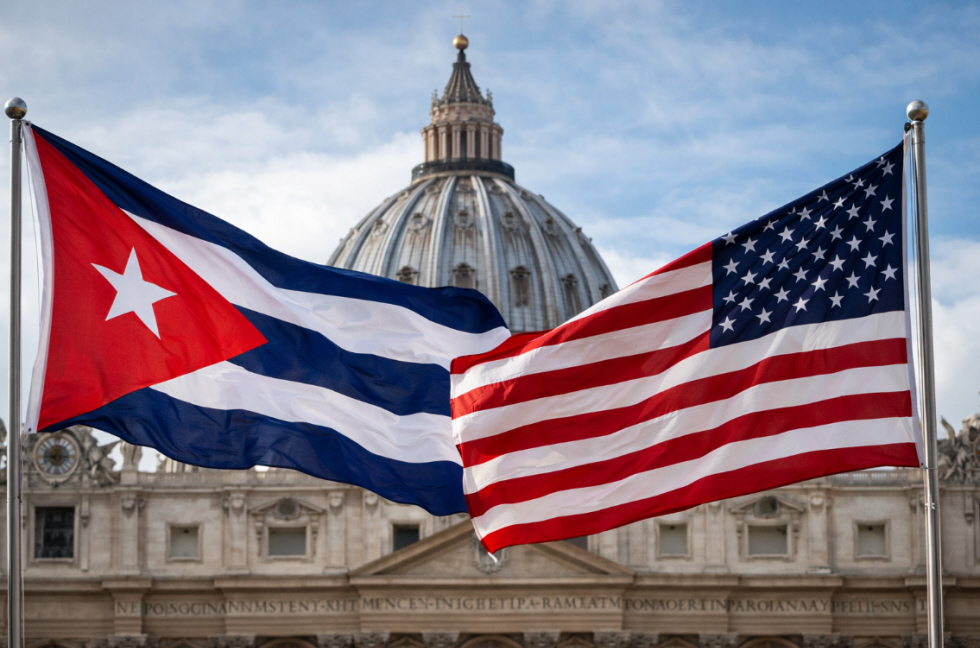
Speculation about a possible mediating role by the Vatican in tensions between United States and Cuba has gained momentum in recent days. Analysts say recent diplomatic activity may indicate indirect contacts between the two sides. The Holy See has historically maintained dialogue channels in sensitive political disputes. The Cuban government unexpectedly announced the release of 51 prisoners, a move that immediately sparked diplomatic interpretations.
Officials in Havana said the decision followed close contacts with representatives of the Vatican. The announcement was delivered through Cuba’s Ministry of Foreign Affairs. At first, it remained unclear whether any of the released individuals were political prisoners. The uncertainty quickly attracted attention from international observers and human rights organizations. Many are awaiting clarification regarding the identities of those freed.
For years, Washington has called for the release of detainees linked to protests or political dissent on the island. The issue has remained a central point of tension in relations between the two countries. Political freedoms and human rights continue to shape diplomatic discussions. In recent months, the U.S. government has increased diplomatic pressure on Havana.
Officials in Washington have urged Cuba to adopt broader economic and political reforms. These demands are part of the ongoing debate about the future of bilateral relations. Cuban President Miguel Díaz-Canel is expected to address the situation during a press conference focused on national and international affairs. Analysts anticipate that the president may provide further context regarding the prisoner releases. His remarks could offer clues about the evolving diplomatic landscape.
Meanwhile, several recent diplomatic developments have fueled speculation about possible international mediation. Observers suggest that the Vatican could serve as a facilitator for dialogue between the parties. The Holy See has previously played such roles during moments of political tension. In late February, Cuban Foreign Minister Bruno Rodríguez Parrilla traveled to Rome as part of a diplomatic visit.
Around the same time, the U.S. chief of mission in Havana, Mike Hammer, also visited the Italian capital. These visits intensified speculation about indirect diplomatic engagement. Analysts interpreted the meetings in Rome as signs of discreet diplomatic activity. While no formal negotiations were confirmed, the timing raised expectations of possible dialogue.
The Vatican has historically participated in mediation efforts in global disputes. The Vatican’s Secretary of State, Pietro Parolin, recently stated that the Holy See seeks “a dialogue-oriented solution” to the challenges facing Cuba. His remarks reinforced the idea of a diplomatic approach focused on negotiation. For now, the potential mediation remains a subject of international attention.