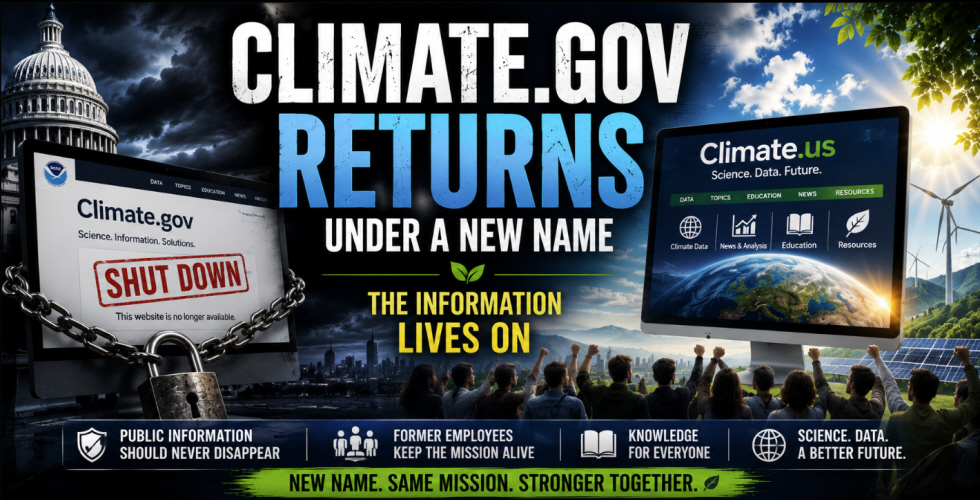
The shutdown of Climate.gov marked the end of one of the most recognized climate information platforms in the United States. For years, the website served students, researchers, journalists, and citizens seeking reliable information about environmental changes. Its content included scientific analysis, educational resources, and accessible explanations of complex climate topics. The disappearance of the site raised concerns among those who valued its contribution to public knowledge.
The decision to close the platform sparked a broader debate about public access to government-funded information. Many users worried that years of accumulated educational and scientific material could be lost. Academic institutions and environmental organizations also expressed concern about preserving those resources. The discussion quickly expanded beyond science into education, culture, and digital preservation. However, the story did not end with the official closure of the website. A group of former employees connected to the project decided to continue its mission by keeping climate information available to the public.
Drawing on their experience and familiarity with the platform, they began developing an independent alternative. Their goal was to ensure that valuable educational content would remain accessible. Their efforts led to the launch of a new platform under a different name. The website restored a significant amount of educational and scientific material that had previously reached millions of visitors. Although it now operates independently from the original government structure, it maintains the same objective of providing climate-related information. Its return attracted attention from educators, researchers, and environmental advocates.
The initiative highlights how digital tools can help preserve knowledge that many consider essential to society. In an era where vast amounts of information exist online, maintaining access to educational resources has become increasingly important. Preserving scientific content allows future generations to continue learning from it. Experts in digital culture and education have pointed to this case as a meaningful example. The story also underscores the role of the professionals who dedicate their careers to public information projects. Many of the former employees involved spent years creating materials designed to improve public understanding of climate science.
Their decision to continue the work demonstrates a commitment to education and outreach. For them, access to knowledge extends beyond administrative and political changes. Beyond political discussions, the episode has gained attention because of its cultural significance. Preserving archives, research, and educational materials is increasingly viewed as a way of protecting modern intellectual heritage. Institutions around the world face similar challenges when digital resources disappear or become inaccessible. This case has become an example of how communities can respond to such situations. The new platform also creates opportunities to expand environmental education.
Climate-related information is widely used in schools, universities, and community programs across the globe. Keeping these resources available supports learning and encourages informed discussion about issues that affect millions of people. The continuation of the project may strengthen that educational impact in the years ahead. Observers note that the situation reflects the growing importance of independent initiatives in the digital age. When an information source disappears, communities often organize to preserve and share valuable knowledge.
Similar efforts have emerged in different fields over the past decade. Technology has made it possible for important projects to find new ways to survive and evolve. The reappearance of these resources under a new identity demonstrates that knowledge can adapt to changing circumstances. What began as the closure of a widely known platform ultimately became a story of resilience and continuity. For many users, the return of these materials represents a victory for education and scientific communication. It also serves as a reminder that valuable information often finds new paths to reach the public.