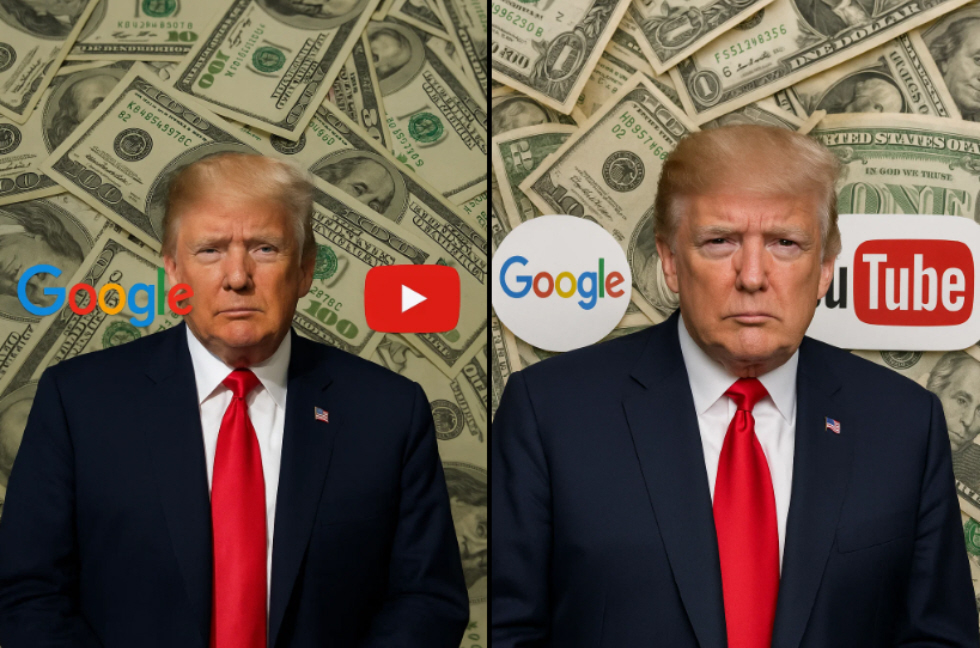
Google, through its YouTube platform, has agreed to pay $24.5 million to settle a lawsuit filed by former President Donald Trump following the suspension of his account in January 2021 after the attack on the U.S. Capitol. According to court documents, of the total settlement amount, $22 million will be directed to the “Trust for the National Mall” to help finance the construction of a new State Ballroom at the White House, while the remaining $2.5 million will be distributed among other plaintiffs, including the American Conservative Union and writer Naomi Wolf, who had also joined the legal action.
The agreement was reached just days before a pivotal hearing in a federal court in California, where the case threatened to drag on and generate further media exposure. YouTube, like other major tech platforms, suspended Trump’s accounts at the time, arguing that his posts risked inciting violence and spreading disinformation. The decision triggered heated debate over the limits of free speech online and the extraordinary power private companies wield over political communication.
While Google did not admit wrongdoing nor commit to changing its policies, the settlement places it alongside other tech giants such as Meta (Facebook) and X (formerly Twitter), which had previously agreed to pay $25 million and $10 million, respectively, to close similar cases. Trump has consistently maintained that his suspensions were a direct violation of his First Amendment rights and a deliberate attempt to silence conservative voices in the digital space.
His legal team described the settlement as a symbolic victory, underscoring that even powerful corporations can be held accountable, while critics downplayed the significance, arguing that the amount is negligible for a company of Google’s size and unlikely to alter its approach to content moderation. Beyond the financial terms, the case reflects a broader struggle between political figures and tech platforms over control of the digital public square.
Analysts say the resolution strikes a delicate balance: avoiding a long and politically charged trial while leaving intact the tech companies’ authority to enforce their content policies. The settlement not only closes a contentious chapter for YouTube but also adds to the ongoing debate about the role of social media in democracy and the extent to which private corporations should be allowed to regulate the voices of influential political leaders.