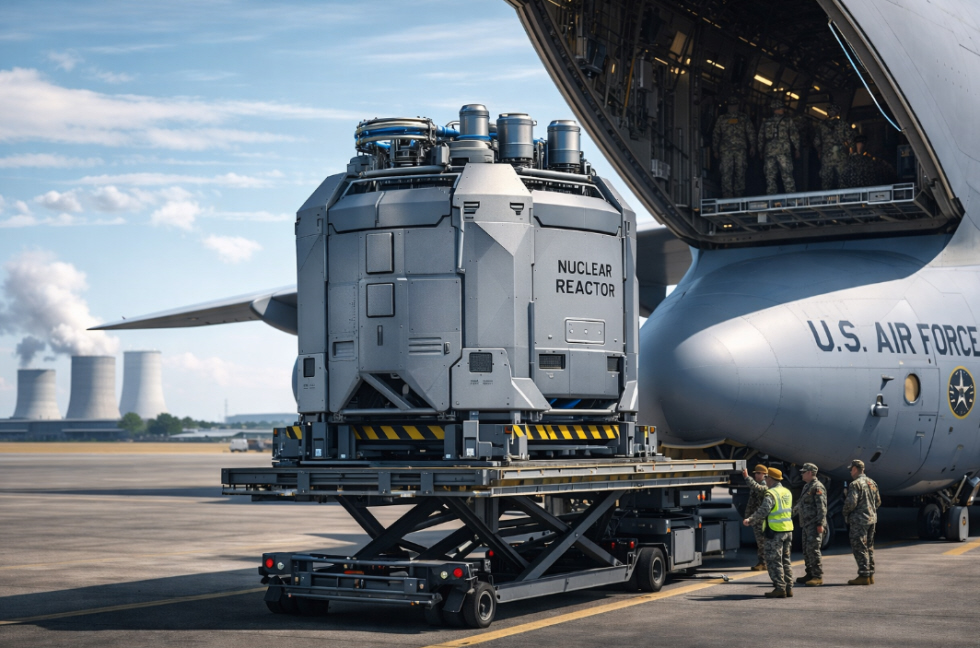
The United States has taken a significant step in advanced energy innovation by conducting the air transport of a next-generation nuclear microreactor as part of a broader experimental program. The operation is aligned with long-term efforts to modernize energy infrastructure and strengthen strategic technological capabilities. The microreactor transported during the demonstration was not loaded with active nuclear fuel.
The primary objective of the mission was to validate the logistical feasibility and operational safety of relocating compact nuclear systems quickly and efficiently. Microreactors represent a new category of small-scale nuclear technology designed to provide power in remote areas, military installations, isolated communities, or emergency scenarios. Their compact design offers flexibility that traditional large-scale nuclear plants cannot easily provide.
Unlike conventional commercial reactors, these systems are engineered to generate limited but stable electricity output while incorporating enhanced passive safety features. Many designs emphasize modular construction, allowing simplified deployment and potential relocation when needed. The initiative fits within a broader national strategy aimed at expanding nuclear generating capacity by mid-century.
Policymakers have increasingly promoted advanced nuclear technologies, including small modular reactors (SMRs), as part of a diversified energy portfolio. From a technological perspective, the challenge extends beyond power generation itself. Standardizing transport, installation procedures, and regulatory approval processes will be essential if microreactors are to become widely deployable solutions.
Energy analysts suggest that miniaturization and modularity could reshape how electricity is delivered, particularly in regions where conventional grid infrastructure is limited or unreliable. Portable nuclear systems could offer a stable alternative in demanding environments. At the same time, mobile nuclear technology raises regulatory and security considerations.
Strict oversight, safety certification, and international coordination will remain critical components of any expansion strategy. The recent air transport demonstration signals that innovation in nuclear energy is entering a new phase, one focused on adaptability and operational flexibility rather than solely on large centralized facilities.
If development continues successfully, microreactors may become an integral element of future energy systems, combining mobility, resilience, and advanced engineering in a rapidly evolving technological landscape.