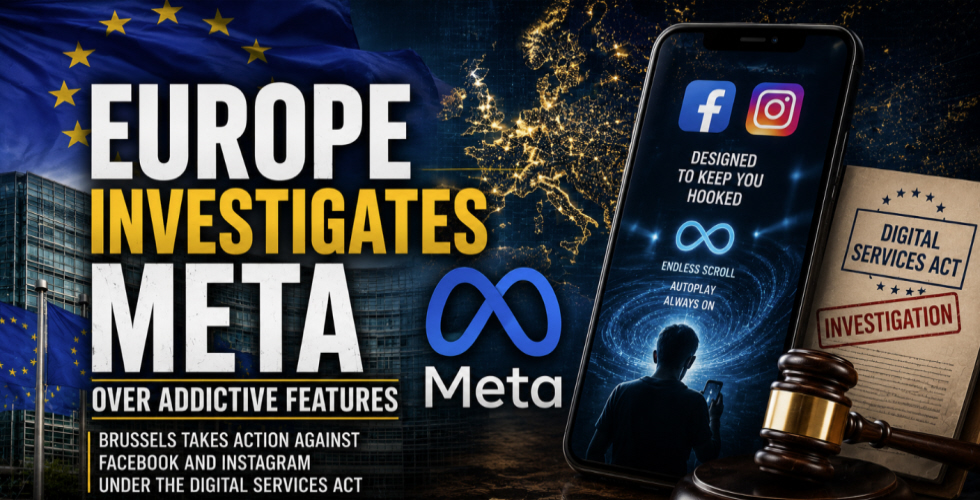
The European Commission’s decision to launch proceedings against Meta marks a new chapter in the growing debate over the impact of social media on everyday life. European regulators argue that certain features on Facebook and Instagram may encourage excessive use among users. The case is being pursued under the Digital Services Act, one of the most ambitious technology regulations adopted by the European Union. Its primary objective is to increase accountability among major online platforms.
Among the features under scrutiny are autoplay videos and infinite scrolling. These tools allow users to consume content continuously without needing to take additional actions. Critics argue that such designs encourage prolonged browsing sessions and make it more difficult for people to disconnect. Technology companies, however, maintain that these features are intended to improve user experience and content accessibility. The debate over potentially addictive social media design is not new. For years, experts in technology, psychology, and education have warned about the effects of prolonged exposure to certain digital platforms.
The ease with which users move from one piece of content to another has been the subject of numerous studies. Some researchers believe these mechanisms take advantage of deeply rooted behavioral patterns. The concern becomes particularly significant when examining the impact on teenagers and young adults. Various organizations have suggested that younger users may be more vulnerable to intensive usage patterns and the constant search for digital validation. Continuous exposure to personalized content can increase the amount of time spent on social platforms. As a result, regulators are paying close attention to how recommendation systems operate.
The European Commission argues that major technology companies must assume greater responsibility for the design of their services. According to this perspective, popularity alone is not enough if certain features may create negative consequences for users. European legislation seeks to ensure that platforms identify and mitigate potential risks. This approach represents a notable shift in the regulation of digital services. Meta now faces the challenge of balancing innovation, profitability, and regulatory compliance. Digital platforms rely heavily on user engagement and the amount of time people spend interacting with content.
The longer users remain active, the greater the advertising and commercial opportunities become. However, increasing regulatory pressure is forcing companies to reassess some of their long-standing strategies. The Digital Services Act has become a key element of Europe’s broader effort to oversee large technology platforms. The regulation establishes specific obligations related to transparency, risk management, and user protection. Companies that fail to comply with these requirements may face substantial financial penalties. As a result, many technology firms have begun reviewing their internal practices.
Beyond the outcome of this particular case, the proceedings could have international consequences. Decisions made by the European Union often influence regulatory discussions and policy initiatives in other parts of the world. What is debated today in Brussels may become a reference point for lawmakers elsewhere tomorrow. The global nature of digital platforms gives these decisions far-reaching significance. The controversy also raises important questions about the future of the internet and social media.
To what extent should companies design experiences that maximize user attention? Where is the line between an effective business strategy and a potentially harmful practice? These issues are likely to remain at the center of public debate for years to come. The confrontation between regulators and technology giants reflects a broader transformation in how society views the digital environment.
There is growing demand for transparency, accountability, and stronger protections for users. Regardless of how the proceedings ultimately conclude, the debate has highlighted the need to reassess the relationship between technology, business, and social well-being. Europe appears determined to play a leading role in shaping that conversation.