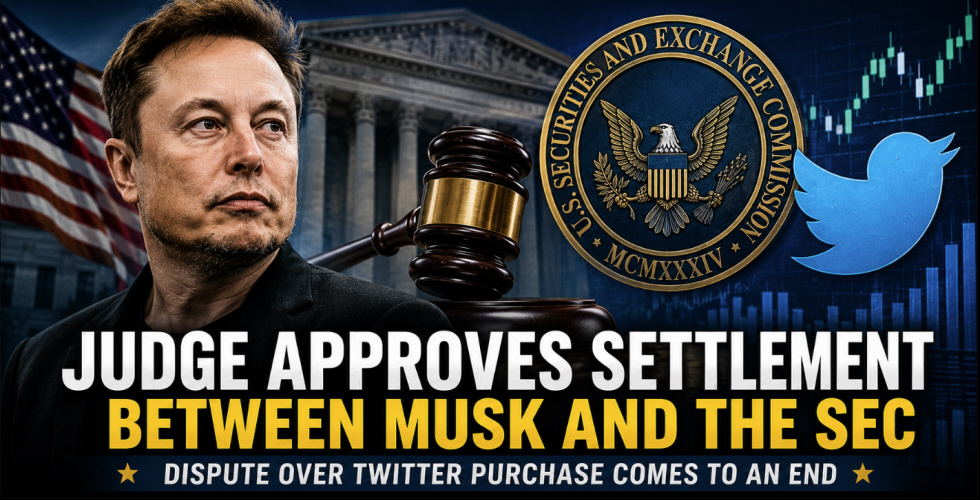
A federal judge has approved a settlement between Elon Musk and the U.S. Securities and Exchange Commission, bringing a major regulatory dispute closer to its conclusion. The decision ends one of the most closely watched financial cases involving a high-profile business leader. The matter had drawn significant attention from investors and market analysts alike. The controversy originated from questions surrounding the timing and disclosure of stock purchases connected to Musk’s acquisition of Twitter.
Regulators argued that certain information was not reported within the deadlines required by federal securities laws. Those concerns eventually led to a formal investigation and legal proceedings. Throughout the case, both sides maintained different interpretations of the regulatory requirements. The SEC emphasized the importance of timely disclosures to protect market transparency, while Musk’s representatives argued that his actions complied with applicable rules and procedures.
The disagreement became a major topic within financial circles. The settlement approved by the court is intended to resolve the dispute without moving forward to a lengthy trial. Such agreements are common in complex regulatory cases where both parties seek to avoid extended litigation and uncertainty. The decision provides a practical path toward closing the matter. Although the judge approved the agreement, concerns were reportedly expressed regarding certain aspects of the settlement process.
At the same time, the court acknowledged that its authority was limited as long as the agreement satisfied the minimum legal standards required under federal law. Those comments attracted attention from legal observers. The case once again highlights the importance of transparency within financial markets. Regulatory agencies continue to emphasize that investors should receive relevant information at the same time in order to maintain fairness and confidence in the trading environment.
These principles remain central to securities regulation. Elon Musk’s role in the dispute ensured widespread public interest throughout the proceedings. As one of the world’s most influential entrepreneurs, his business decisions frequently generate attention across technology, finance, and investment communities. The case became another example of that influence. For investors, the resolution removes a source of uncertainty that had surrounded the issue for an extended period.
With the dispute nearing its conclusion, attention can once again focus on Musk’s broader ventures in artificial intelligence, electric vehicles, space exploration, and technology innovation. Markets often welcome greater legal clarity. Industry experts believe the case may serve as a reference point for future disputes involving corporate acquisitions and disclosure obligations.
As financial markets continue to evolve rapidly, companies and executives face increasing pressure to comply with reporting requirements and regulatory expectations. The outcome could influence future enforcement actions.
With the court’s approval of the settlement, one of the most notable regulatory battles in recent years has effectively reached its final stage. While debates over financial oversight and corporate accountability will continue, the case serves as a reminder of the critical role transparency plays in modern capital markets.