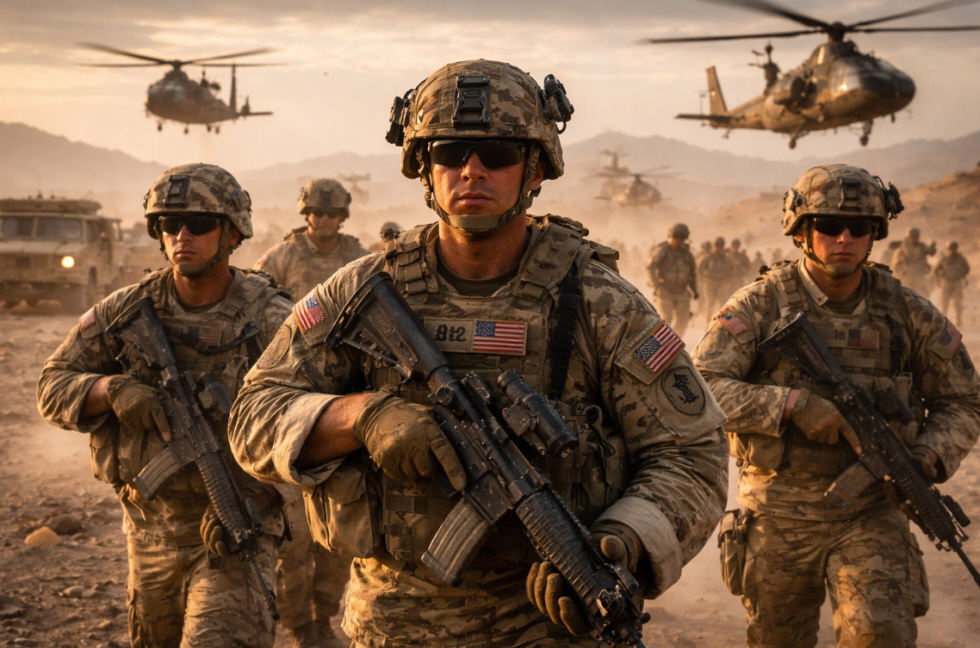
The United States is reportedly evaluating the deployment of approximately 3,000 troops from the 82nd Airborne Division to the Middle East, according to defense-related sources. The information has not been officially confirmed, but it has drawn attention in strategic circles. The potential move comes amid rising tensions in the region. The situation continues to be closely monitored.
The 82nd Airborne Division is one of the most recognized units in the U.S. Army, specializing in rapid deployment from the air. Its ability to intervene quickly makes it a key asset in crisis scenarios. Such forces are typically used when an immediate response is required. Their possible mobilization carries strong strategic significance. According to the reports, the plans are still under evaluation, with no final decision announced by the Department of Defense.
Moves of this nature are often handled discreetly in their early stages. Authorities usually avoid confirmation until operations are clearly defined. This adds uncertainty to the situation. The current regional context includes multiple tension points that could justify a military reinforcement. Indirect conflicts, threats to strategic infrastructure, and the presence of armed groups have raised alert levels. The United States maintains key interests in the region.
Regional stability remains a priority. The possibility of such a deployment is often interpreted as a preventive signal rather than an immediate action. The goal may be to deter escalation or reinforce an existing military presence. Decisions like this are intended to influence the balance of power. The strategic message is significant. At the same time, the movement of elite troops can trigger reactions from other regional actors.
Military actions in the Middle East are closely watched by both allies and adversaries. Each move can lead to responses. The environment remains highly sensitive. Within the United States, such decisions also carry domestic political implications. Deploying troops abroad is often a subject of internal debate. Factors such as cost, risk, and strategic objectives are part of the discussion. Foreign policy and national security are closely intertwined.
Recent history shows that similar deployments have been used during periods of heightened tension to reinforce positions or anticipate complex scenarios. The speed of the 82nd Airborne allows for action within very short timeframes. This makes it a top-tier strategic resource. Its possible activation does not go unnoticed. For now, the lack of official confirmation leaves the situation open to multiple interpretations. Final decisions will depend on how events evolve in the region.
The available information suggests preparation rather than immediate execution. Monitoring continues. The overall picture reflects a phase of analysis and prevention rather than direct action. However, the possibility of deploying troops at this level underscores the seriousness of the moment. The Middle East remains a key focal point in global geopolitics. The situation continues to develop.