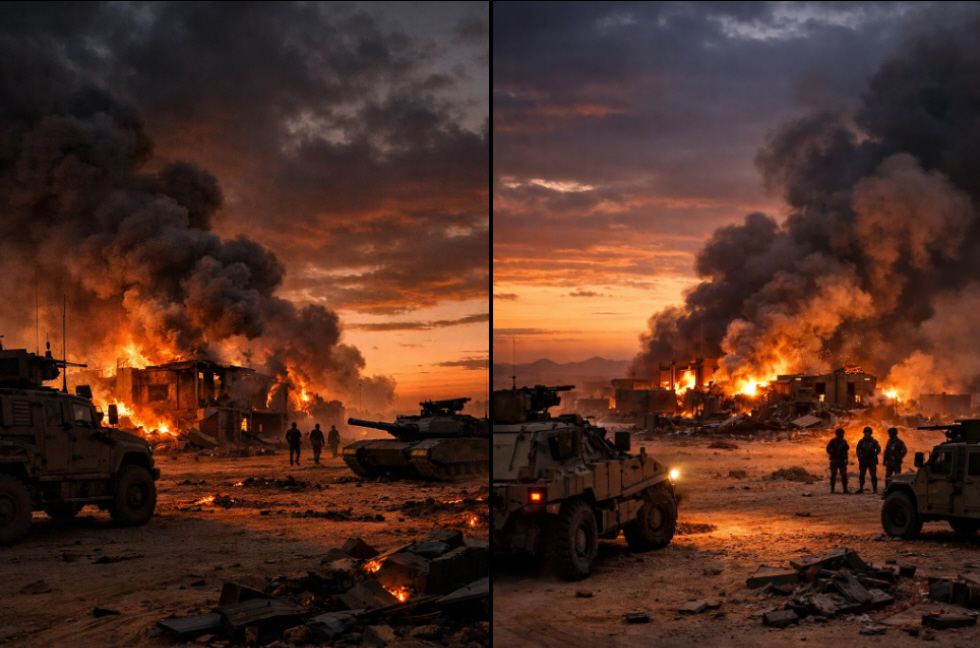
A new strike in western Iraq has once again raised tensions in a region already marked by instability. According to security sources, a base linked to local forces was hit by missiles launched from the air. The incident took place in Anbar province, a strategic area within the country. The attack has reignited concerns about a possible escalation of the conflict. The targeted installation is associated with the Popular Mobilization Forces, a coalition of militias with close ties to Iran.
These forces are formally integrated into Iraq’s state security structure, adding complexity to the situation. Their presence has played a key role in past internal conflicts. However, they have also been a source of international controversy. Initial reports indicate that at least two missiles were fired from a fighter jet at the base. While no official responsibility has been confirmed, the nature of the strike suggests a high-precision military operation. Local authorities have begun assessing the extent of the damage.
The situation remains fluid. This is not the first incident of its kind in the area. The same base had previously been targeted in an earlier attack that resulted in multiple casualties among Iraqi fighters. Repeated strikes on the same location reinforce concerns about vulnerabilities in certain installations. They also highlight the persistence of regional tensions. The broader regional context is shaped by increasing indirect confrontation between international actors and allied groups in the Middle East.
Iraq, due to its strategic location, has become a key focal point in these dynamics. Any incident within its territory carries implications beyond its borders. The balance remains fragile. Iraqi authorities face the challenge of maintaining internal stability while navigating external pressures. The presence of multiple armed actors within the country complicates the situation. Coordination between official forces and allied groups is not always straightforward.
This increases the risk of incidents like the one reported. At the international level, the attack has raised concerns about a potential escalation in the region. The use of missiles and aerial operations signals a level of tension that could intensify. The global community is closely monitoring developments. Reactions may influence the direction of events. Meanwhile, local populations remain among the most affected by such confrontations.
Areas near military installations often face constant risk. Uncertainty becomes part of daily life. Stability continues to be a distant goal. The incident also revives debate over the role of militias within state security frameworks. Their integration presents both political and operational challenges. The line between official forces and independent actors can become blurred.
This further complicates conflict management. For now, the situation remains uncertain, with many questions surrounding the consequences of this latest strike. Investigations are ongoing, and more clarity is expected in the coming hours. What happened in Anbar once again underscores the fragility of the regional landscape. Tensions continue to rise.