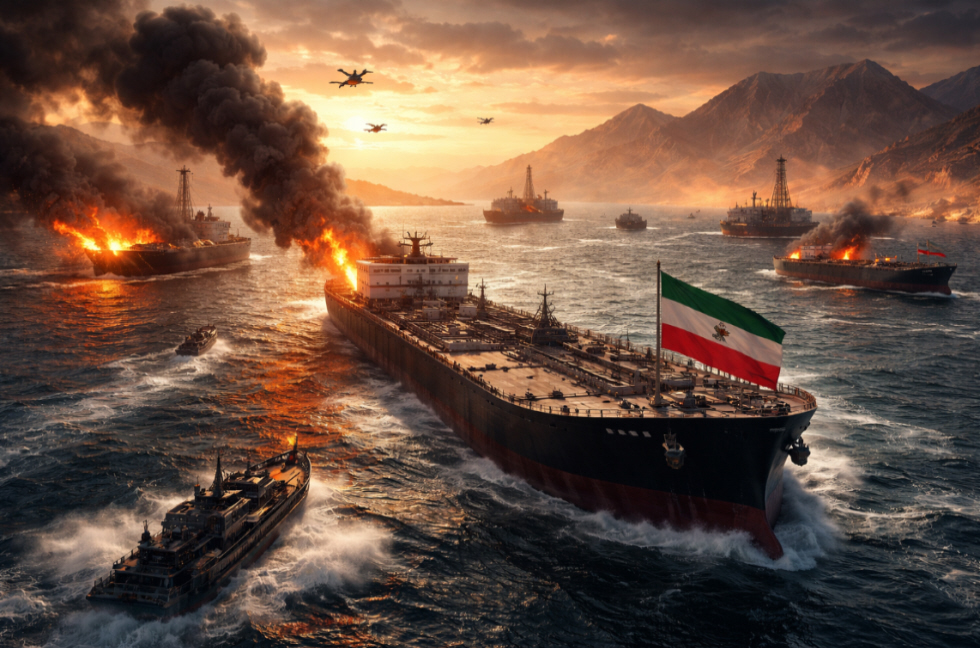
The Strait of Hormuz remains closed, solidifying its position as one of the most critical geopolitical flashpoints in the world today. This vital maritime corridor for global energy transport is under strict control, significantly disrupting the normal flow of international trade. Uncertainty continues to rise as markets see no clear signs of an imminent reopening. Governments, corporations, and consumers worldwide remain on high alert.
Only a limited number of vessels are able to pass through, primarily Iranian tankers or cargo shipments authorized under Tehran’s conditions. Most of these shipments are directed toward Asia, particularly China and India, which continue securing strategic supplies. This selective control strengthens Iran’s influence over one of the most important energy arteries on the planet. At the same time, it restricts access for other nations to critical resources.
The crisis has evolved into a war of attrition, where unconventional tactics outweigh direct confrontation. Iran continues to apply sustained pressure through logistical disruptions and indirect territorial control. This prolonged strategy complicates any swift resolution and extends instability across the region. The consequences are already being felt far beyond the Middle East. The energy impact is profound and unprecedented in recent history. The world is facing an estimated loss of 14 million barrels per day of crude oil and refined products. This sudden drop in supply has created significant tension in global markets, driving volatility in prices.
Economies that heavily depend on energy imports are among the most vulnerable in this situation. In addition, the global supply of liquefied natural gas has been severely affected, with nearly one-fifth of its volume compromised. This added pressure intensifies the strain on industries, power systems, and supply chains. Countries relying on LNG for electricity generation are now facing critical decisions to maintain operations.
The crisis is no longer regional—it is clearly global. Energy prices have begun to reflect this imbalance, with increases directly impacting the cost of living. Transportation, production, and consumption are affected in a chain reaction that hits both advanced economies and developing nations. Energy-driven inflation is once again becoming a dominant factor in the global economy. Markets react nervously to every new development.
Major world powers are watching cautiously, weighing their responses while avoiding escalation into direct confrontation. Diplomatic efforts attempt to create negotiation pathways, though progress remains limited. The complexity of the situation reduces the chances of quick and effective intervention. Every move is carefully calculated to prevent broader consequences. Meanwhile, alternative routes are unable to compensate for the scale of the disruption. Global shipping is being reorganized, but at higher costs, longer transit times, and increased risks. Insurance premiums are rising, and many companies are avoiding high-risk zones altogether.
International trade is adapting, but not fast enough to offset the shock. The global energy balance is entering a critical phase, where any shift could trigger even broader consequences. Strategic reserves in several countries are beginning to play a key role in cushioning the impact. However, these measures are temporary and cannot replace steady supply flows. Pressure continues to build across the system.
The outcome of this crisis remains uncertain, but its impact is already evident at every level. From geopolitics to household economies, the closure of the Strait of Hormuz is reshaping global dynamics. The world is facing one of the most significant energy challenges in recent history. And for now, stability still appears far from reach.