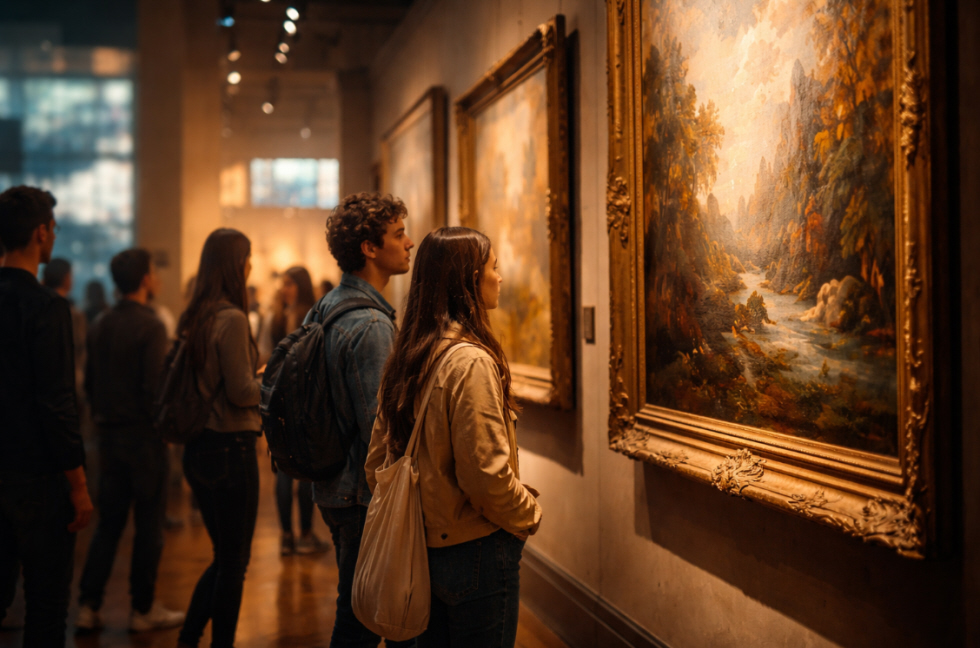
In a world dominated by screens, a surprising cultural shift is taking place. Traditional art forms—painting, sculpture, and analog photography—are experiencing a powerful revival among younger generations seeking authenticity. Galleries in cities like New York, Paris, and Tokyo report increasing demand for physical exhibitions, as audiences crave real-world experiences beyond digital feeds.
Artists are also responding to this demand by returning to handcrafted techniques, emphasizing texture, imperfection, and emotional depth. This movement is not a rejection of technology but a response to digital saturation, where constant connectivity has led to a desire for something tangible and permanent. Cultural analysts suggest this revival reflects a deeper psychological need for human connection and sensory engagement.
Unlike digital art, physical creations occupy space, age over time, and create a unique presence that cannot be replicated online. At the same time, hybrid formats are emerging. Artists blend digital tools with physical outputs, creating limited-edition prints or augmented installations that bridge both worlds. This fusion is redefining how art is consumed and valued in modern society. Museums are adapting quickly, designing immersive spaces that encourage visitors to interact physically with art.
Attendance numbers show a steady rise, especially among audiences under 35, signaling a generational shift in cultural priorities. Collectors are also changing their behavior. Instead of investing solely in digital assets, many are returning to tangible works, viewing them as both emotional investments and stable cultural assets.
This renewed interest in physical art is reshaping creative industries, from fashion to interior design, where handcrafted elements are becoming increasingly desirable. Ultimately, the resurgence of traditional art forms highlights a simple truth: in a fast-moving digital world, people are still searching for something real.