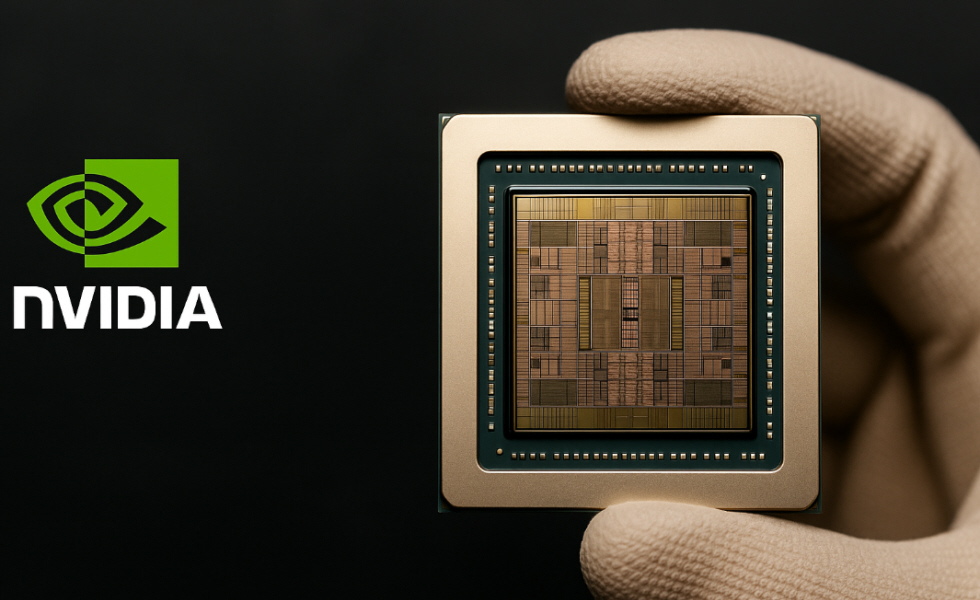
According to experts, U.S. chipmaker Nvidia is working on a scaled-down version of its latest artificial intelligence processor for China. The chip, based on the next-generation Blackwell architecture, will be more powerful than the H20 model, which has so far been legally available in the People’s Republic, several people familiar with the matter said.
The processor, provisionally called B30A, is expected to reach roughly half the computing power of the top-tier B300 model sold in the West, Reuters reported. This would still make the B30A many times faster than the H20, which is based on the older Hopper architecture.
Blackwell processors are up to 30 times more powerful than the previous generation. Competition between the U.S. and China Speculation about new Chinese variants of Nvidia’s AI processors has been circulating for some time.
A few days ago, U.S. President Donald Trump indicated that he wanted to allow the sale of lower-powered Blackwell processors to China. According to critics, the People’s Republic could surpass the United States in the development of the promising AI technology. To curb China’s technological and military rise, the United States has increasingly restricted the export of high technology to the country.
Nvidia responded each time by developing new scaled-down variants of its AI chips to comply with the applicable regulations. China is an important sales market for the group, contributing about one-sixth of total revenue in the last fiscal year. Eased restrictions The U.S. government had recently allowed the sale of H20 chips again.
However, in exchange for easing the restrictions, the company must pay 15 percent of its China business revenues to the U.S. Treasury. Similar requirements apply to the export of the MI308 AI chip from U.S. company AMD.
Access to Western high technology is a key issue in trade talks between China and the United States. Nvidia will deliver the first test samples of its new processors to Chinese customers starting next month, the sources said. The chip company declined to comment in detail on the information. When asked, it said it was continuously reviewing its product portfolio. The U.S. Commerce Department could not immediately be reached for comment.