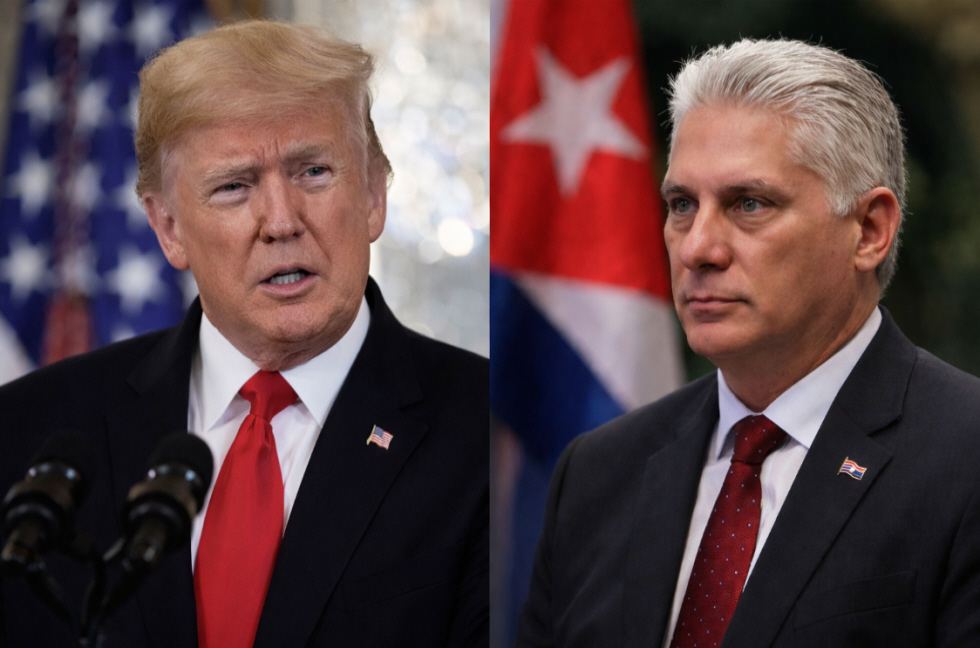
Washington is evaluating different scenarios regarding a potential political shift in Cuba, as new internal discussions reflect growing strategic interest in the region. These conversations, still in a preliminary phase, revolve around possible actors who could play a role in an eventual transition. Such analyses typically take place behind closed doors and without official confirmation. However, their existence signals an evolving dynamic.
Within these evaluations, the possibility has emerged that individuals linked to political and economic spheres, particularly those with Cuban heritage, could have some level of influence in the process. The idea is to leverage cultural connections and existing support networks outside the island. This is not a confirmed decision, but rather a scenario under consideration. It is part of a broader range of strategic options. References to a potential leadership change have been interpreted with caution by international analysts. The concept of political transition in Cuba involves multiple internal and external variables.
Any movement in this direction would be shaped by complex and sensitive factors. The region’s recent history adds an additional layer of uncertainty. In this context, some proposals have been compared to recent developments in other Latin American countries. These comparisons aim to provide a framework of reference, although each case has its own unique characteristics. Cuba’s reality presents particular challenges that make direct parallels difficult.
Careful and nuanced analysis is required. U.S. authorities have not issued official statements confirming these scenarios, reinforcing the idea that these are internal discussions still in progress. Such evaluations are often part of broader strategic planning processes. The objective is to anticipate potential outcomes and define possible responses. Preventive planning remains key in international policy.
At the same time, the international community is closely watching any signals related to Cuba’s political future. The island continues to hold geopolitical relevance in the Western Hemisphere. Any shift could have wider regional implications. Stability and balance remain central concerns. The role of external actors in political transition processes often generates debate. The line between support and intervention can become blurred depending on the context. For this reason, any initiative in this direction is typically examined with great scrutiny.
The implications extend beyond politics alone. Within the United States, these discussions also carry a domestic dimension, particularly in relation to communities with historical ties to Cuba. These connections bring a unique perspective to the debate. However, they also introduce sensitivities that must be handled carefully. The issue goes beyond foreign policy.
Meanwhile, in Cuba, the situation continues to be observed from multiple angles, both internally and externally. Local dynamics will play a decisive role in shaping any future scenario. The evolution of events will largely depend on domestic factors. The international environment may influence, but not fully determine the outcome.
The broader picture reflects a moment of analysis and anticipation rather than concrete decisions. Discussions in Washington suggest strategic preparation for potential changes. However, the direction of events remains uncertain. Cuba’s political future continues to be open to multiple possibilities.