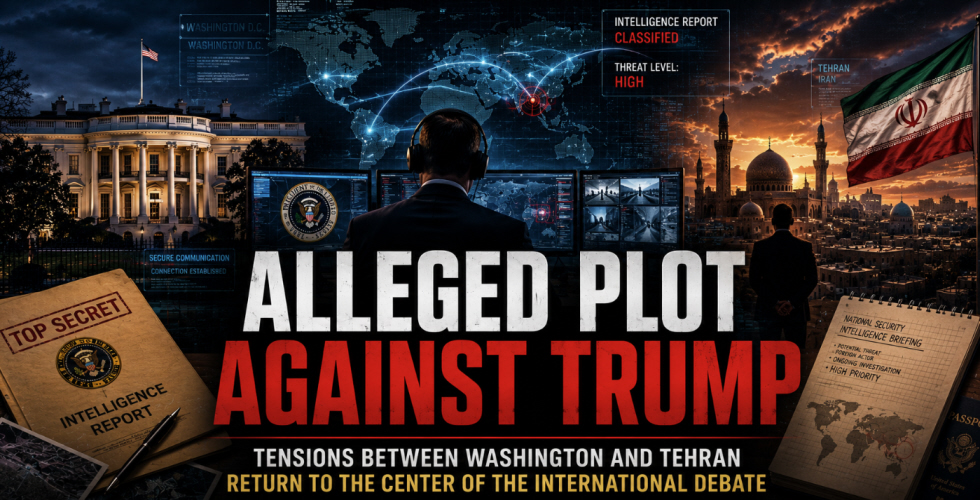
The recent intelligence information reportedly shared by Israel with the United States regarding an alleged Iranian plot against Donald Trump has once again placed international security at the center of global attention. The report emerges at a time of heightened tensions across the Middle East and adds another layer of uncertainty to an already fragile geopolitical environment. Regardless of the final outcome of any investigation, the political impact of such allegations is already significant. Governments and security agencies around the world are closely monitoring developments.
Threat assessments involving current or former world leaders often trigger immediate reactions from intelligence and security organizations. When such warnings involve rival states with a long history of confrontation, the consequences can extend far beyond national borders. In this case, the reported intelligence exchange highlights the close cooperation between Washington and Jerusalem. It also reflects the seriousness with which both governments approach potential security risks. Donald Trump remains one of the most influential political figures in the United States.
Although he is no longer in office, many of his decisions continue to shape international discussions and strategic calculations. Among the most significant was the operation that resulted in the death of Iranian General Qasem Soleimani in 2020. That event dramatically altered relations between Washington and Tehran and remains a major reference point in regional politics. Since then, tensions between the United States and Iran have gone through periods of escalation and relative calm. However, mutual distrust has never fully disappeared. Every new development is often viewed through the lens of previous confrontations and unresolved grievances.
As a result, reports involving possible threats or retaliation receive extraordinary attention from policymakers and analysts alike. Israel’s role in this situation is also noteworthy. As one of America’s closest allies in the Middle East, intelligence sharing between the two nations has long been a cornerstone of their strategic partnership. Security agencies on both sides maintain continuous communication regarding regional threats and emerging risks. Any intelligence warning transmitted through these channels is generally treated with considerable importance.
At the same time, intelligence assessments are not always confirmed by later investigations. Agencies frequently work with fragments of information, intercepted communications, or preliminary evidence that require further verification. For that reason, caution remains essential when evaluating reports of this nature. Definitive conclusions often emerge only after extensive analysis and review. Within the United States, allegations involving threats against high-profile political leaders can also have domestic implications. The protection of former presidents remains a permanent priority for federal authorities. Any indication of a potential threat can lead to enhanced security measures and renewed assessments of existing protection protocols. Public interest in such developments tends to be immediate and intense.
On the international stage, the report could further complicate already strained relations between Washington and Tehran. Diplomatic efforts aimed at reducing tensions often face setbacks whenever new accusations emerge. Claims involving potential plots or security threats can reinforce existing suspicions and harden positions on both sides. The language used by political leaders in the coming weeks may influence the broader diplomatic climate. There is also an important symbolic dimension to these allegations.
Threats directed at globally recognized political figures are often viewed as challenges to international stability and security norms. Even when they remain unproven, such reports can generate uncertainty among governments, investors, and international observers. Perceptions of risk can sometimes carry consequences that extend beyond the facts themselves. For now, attention remains focused on what additional information may be released by American and Israeli officials in the days ahead.
As investigations and intelligence reviews continue, the situation is likely to remain a subject of debate among policymakers and security experts worldwide. The episode serves as a reminder that geopolitical tensions remain deeply embedded in international affairs. Careful diplomacy and responsible communication will be essential to prevent further escalation.