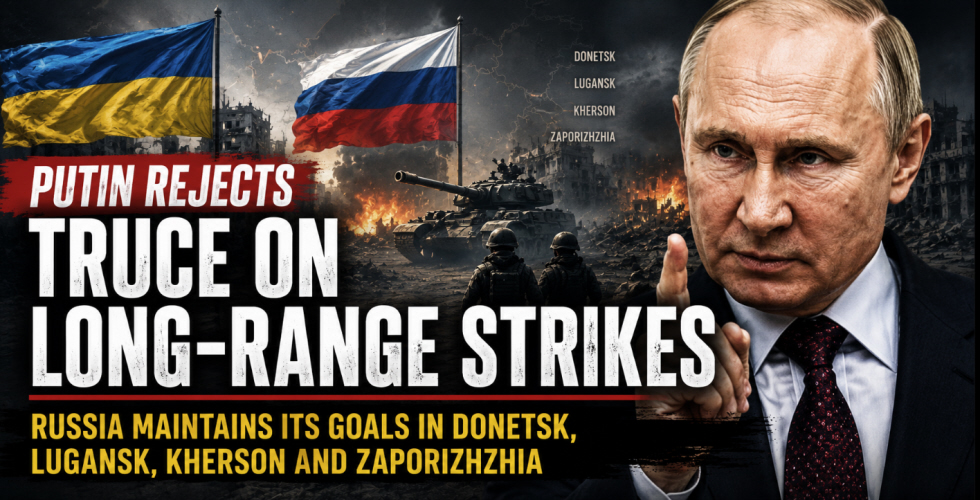
Russia’s rejection of a proposed halt to long-range attacks highlights how far the conflict in Ukraine remains from any meaningful diplomatic breakthrough. The proposal aimed to reduce the intensity of the war by limiting strikes deep behind the front lines. However, Moscow appears unwilling to surrender a tool it considers strategically valuable. The decision reflects broader military and political calculations rather than a single negotiating position. Ukraine has sought measures that could reduce the impact of attacks on infrastructure, logistics hubs and civilian areas.
A pause in long-range operations could help stabilize conditions and lower the humanitarian and economic costs of the conflict. It would also demonstrate a willingness to explore limited confidence-building measures. Yet those efforts face significant resistance from the Russian side. President Vladimir Putin has repeatedly emphasized Russia’s objectives in the regions of Donetsk, Lugansk, Kherson and Zaporizhzhia. Moscow continues to view these territories as central to its long-term strategy in Ukraine. Accepting restrictions on military operations before achieving those goals could be interpreted as a strategic concession.
As a result, the Kremlin appears determined to maintain military pressure. The rejection of the proposal suggests that Russia is not interested in freezing the conflict under current conditions. Instead, Moscow appears focused on strengthening its position on the battlefield before considering broader negotiations. As long as Russian leaders believe they can improve their leverage, incentives for compromise remain limited. Military calculations continue to outweigh diplomatic opportunities. For Ukraine, the proposal represented a practical attempt to reduce destruction while maintaining its defense efforts.
Long-range strikes have become a major component of the conflict, affecting energy infrastructure, transportation networks and strategic facilities. Limiting such attacks could provide temporary relief for both military and civilian systems. Nevertheless, the initiative failed to gain Russian support. The disagreement illustrates how differently both sides view the path toward de-escalation. Ukraine sees limited agreements as potential steps toward broader negotiations. Russia, however, appears concerned that even partial restrictions could reduce its operational flexibility. These contrasting perspectives make it difficult to establish common ground. As a result, even narrowly focused proposals face major obstacles. Moscow’s decision also sends a message to Western governments supporting Ukraine.
By rejecting the proposal, Russia signals that it remains committed to pursuing its objectives despite international pressure. The Kremlin may believe that time and persistence can improve its strategic position. Such calculations contribute to the continuing deadlock in diplomatic efforts. For Europe, the development reinforces concerns that the conflict will remain a long-term security challenge. Governments across the continent continue to face economic, political and military consequences linked to the war. The absence of progress toward limited agreements increases uncertainty about future stability. Many policymakers now expect the conflict to remain unresolved for an extended period.
The broader issue is that territorial ambitions and national security concerns continue to dominate decision-making on both sides. Ukraine remains committed to defending its sovereignty and internationally recognized borders. Russia continues to pursue objectives that it considers essential to its strategic interests. Until those positions evolve, negotiations are likely to remain difficult.
In conclusion, Russia’s rejection of a long-range strike truce reflects more than a disagreement over military tactics. It highlights the fundamental gap separating the goals of Moscow and Kyiv. While diplomatic proposals may continue to emerge, meaningful progress will remain elusive as long as both sides prioritize battlefield outcomes over compromise. For now, the conflict appears set to continue along its current path.
By:
Williams Valverde.