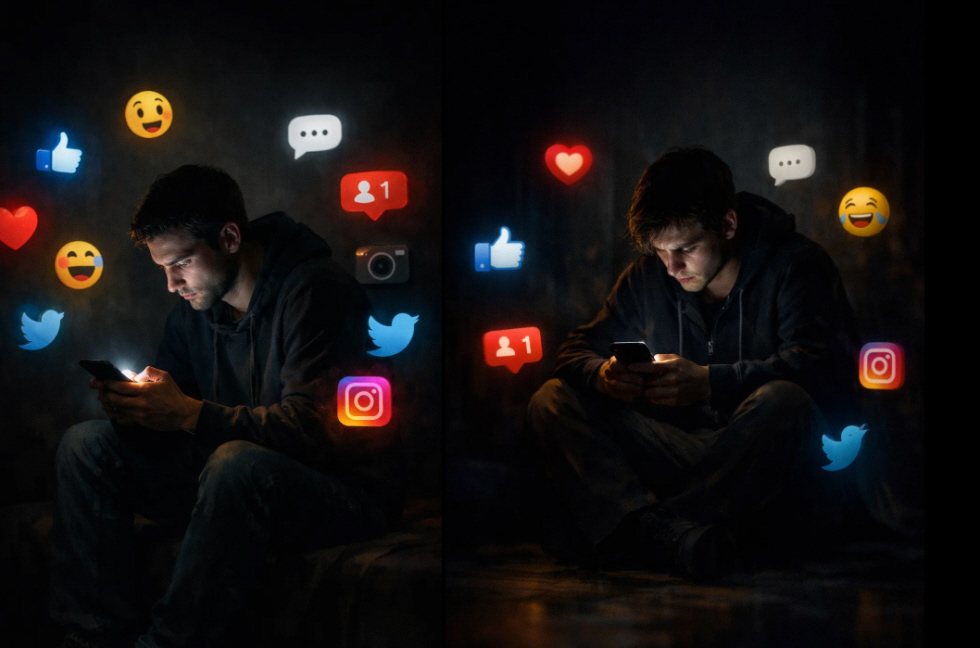
We live in an era where digital connectivity has become a constant presence. Social media, instant messaging, and online platforms have transformed the way we relate to one another, removing barriers of time and distance. Yet this apparent closeness reveals a troubling paradox: the more connected we are, the greater the sense of isolation seems to become. Digital loneliness does not manifest as a lack of interaction, but as a loss of depth in human relationships.
Conversations are reduced to quick exchanges, emotions to symbols, and shared time to fragmented attention. This shift is redefining what companionship means in modern life. The impact of this transformation is especially visible among younger generations. Growing up surrounded by technology, they develop new forms of communication, but often struggle to build lasting and meaningful relationships.
Immediacy replaces patience, and digital validation frequently takes the place of genuine emotional connection. At a psychological level, this dynamic produces significant effects. Constant exposure to curated and idealized lives on social media can generate feelings of inadequacy, anxiety, and disconnection. Continuous comparison erodes self-esteem, while superficial interactions limit the formation of authentic and lasting bonds.
From a social perspective, hyperconnectivity is reshaping traditional spaces of interaction. Family gatherings, face-to-face conversations, and shared moments are increasingly replaced by the simultaneous presence of devices. Technology, designed to bring us closer, often creates new forms of distance. However, not everything in this landscape is negative.
Technology remains a powerful tool that, when used wisely, can strengthen relationships, connect communities, and provide access to information and support. The issue is not its existence, but the excessive or unbalanced way in which it is often used. The real challenge lies in finding balance. Reclaiming spaces for real interaction, encouraging deeper conversations, and learning to disconnect intentionally are essential steps to counter this phenomenon.
The quality of relationships must once again take priority over the quantity of digital interactions. Ultimately, digital loneliness raises a broader reflection about the direction of contemporary society. It is not about rejecting technological progress, but about humanizing it. In a world where everything is just a click away, the rarest and most valuable resource is becoming genuine presence—the kind that is not measured in connections, but in real human bonds.
By:
Williams Valverde