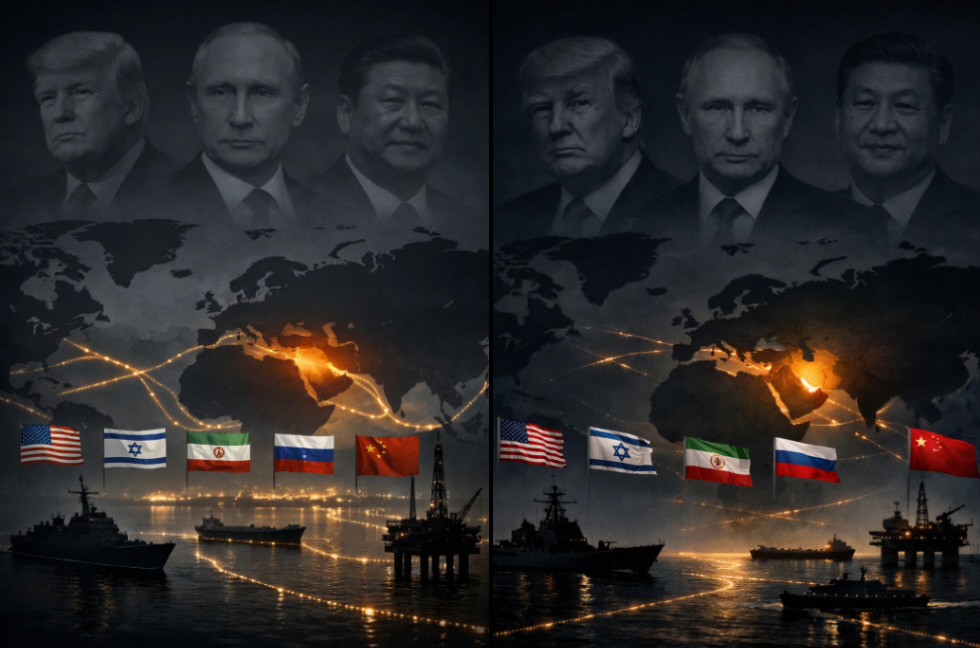
The conflict surrounding Iran has evolved beyond a regional confrontation into a phenomenon with global implications. What initially appeared to be a contained escalation has transformed into a multi-dimensional crisis. Recent military actions reflect a level of intensity that can no longer be overlooked. The world is watching, but it is also beginning to feel the consequences. The involvement of powers such as the United States and Israel has elevated the conflict to a higher strategic level.
This is no longer limited to tactical operations, but rather a broader effort that reshapes geopolitical balances. Each move carries implications beyond the battlefield. The global landscape is shifting in real time. Iran, for its part, maintains a posture that blends military resistance with regional projection. Its ability to influence multiple fronts makes it a central actor in the unfolding situation. It is not simply a participant, but a strategic node within a wider network. This complexity makes any quick resolution increasingly difficult. Adding to this dynamic is the role of other major powers such as Russia and China, whose interests are not always openly expressed.
Their influence is felt across diplomatic, economic, and strategic levels. These relationships introduce additional layers of complexity. The conflict is no longer bilateral, but systemic. One of the most sensitive points remains the Strait of Hormuz, a critical artery for global energy trade. Any disruption in this corridor produces immediate effects across international markets. Oil becomes both a strategic tool and a source of pressure. The global economy is directly exposed to instability.
The extensive use of high-precision weaponry, including long-range missiles, highlights the technological nature of modern warfare. This is not a conventional war, but a confrontation where logistics and industrial capacity play decisive roles. Sustainability becomes a central variable. The pace of operations tests structural limits. Within this context, a key question emerges: the real capacity of the United States to sustain a prolonged conflict of this scale. While it possesses the most powerful military structure in the world, its capabilities are not without limits.
Logistics, operational fatigue, and production constraints impose real boundaries. Modern warfare is also a test of endurance. The intensive use of strategic resources in recent weeks suggests that even the strongest powers must carefully manage their capabilities. The replenishment of advanced systems is neither immediate nor easily scalable. This creates internal pressure within military planning. The speed of conflict can outpace the ability to recover. Beyond military strength, another equally decisive dimension emerges: economic capacity. Modern wars are not fought solely with weapons, but with financial resources, industrial output, and domestic stability.
Each operation carries a cumulative cost that directly affects the broader economy. The question is no longer just whether action is possible, but how long it can be sustained. The United States holds one of the largest economies in the world, yet even that strength faces limits under prolonged pressure. Sustained military spending, combined with global commitments and internal economic dynamics, can generate fiscal strain.
History shows that long wars eventually shift their burden onto the economy. And that impact, while gradual, becomes unavoidable. At the same time, the conflict unfolds within a deeply interconnected global economy. Factors such as oil prices, supply chains, and financial markets amplify every development. A war in the Middle East does not remain confined to the region.
It translates into inflation, uncertainty, and economic pressure worldwide. In parallel, information plays a central role in shaping perceptions of the conflict. Official narratives, leaks, and international analysis form a constantly evolving picture. Truth is not always immediate or clear. Interpretation itself becomes part of the battlefield. The international community watches with concern, yet its capacity to intervene remains limited. Calls for restraint have had only partial impact.
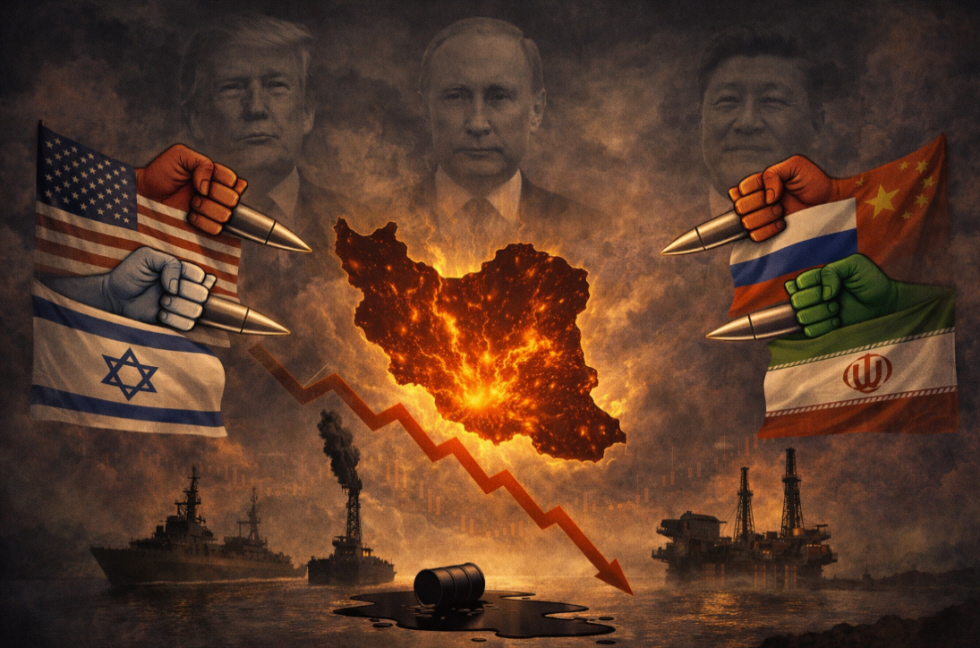
The lack of global consensus complicates any coordinated response. The international system itself reveals its underlying tensions. The final question is no longer simply how this war will end, but what kind of world it will leave behind. The changes already underway suggest a profound transformation of the global order. The balance of power is shifting. And its consequences will extend far beyond the battlefield.
By:
Williams Valverde